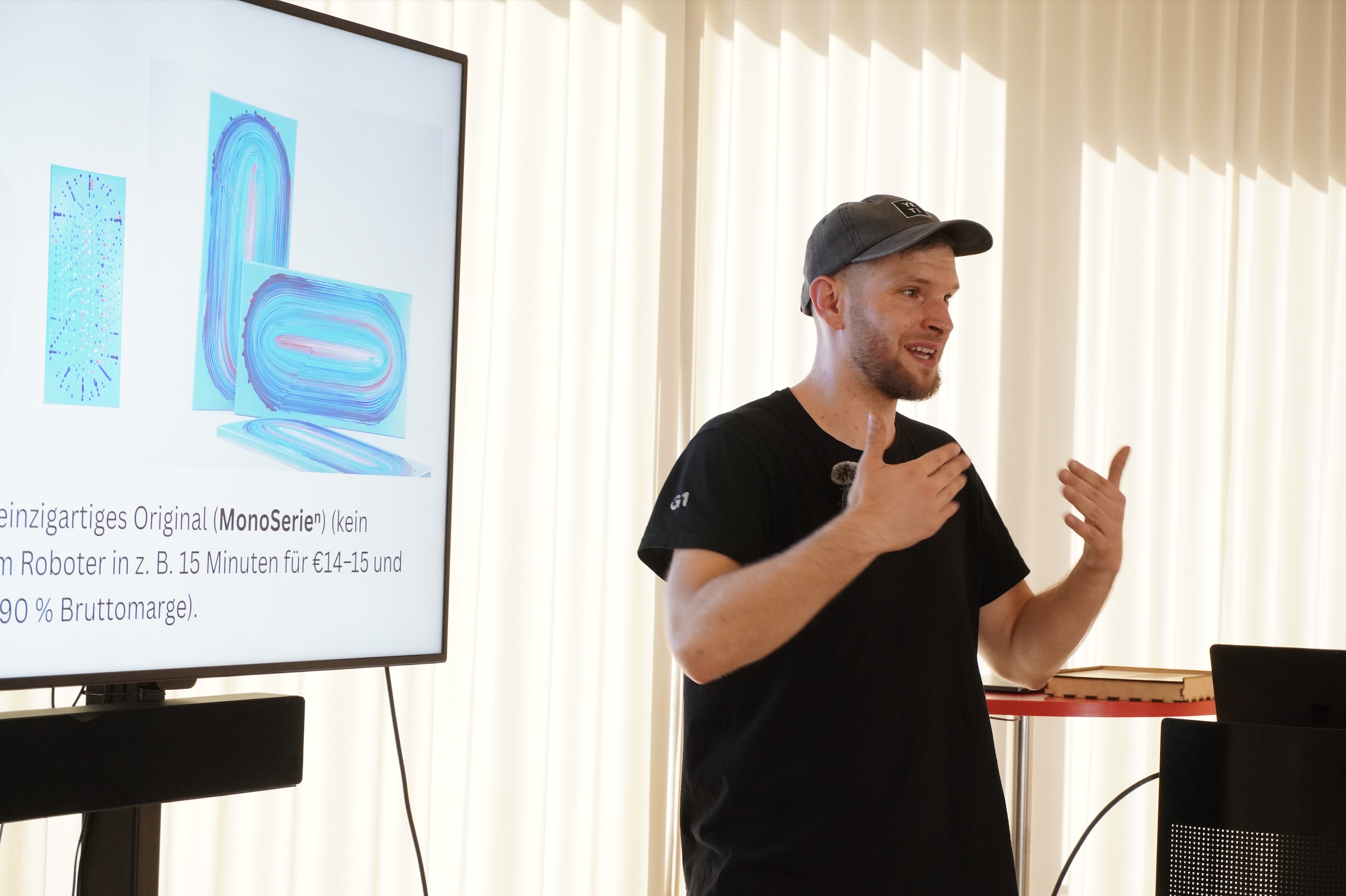
Mentors & Business Angles
of Leonⁿ MonoSerieⁿ
My first mentor & business angel was Thomas Kirchner (founder and design thinking consultant) – founder of ProGlove with a ~€500M exit, and the guy who proved you can take design thinking from “nice workshop” to saving real human and operational time at scale.
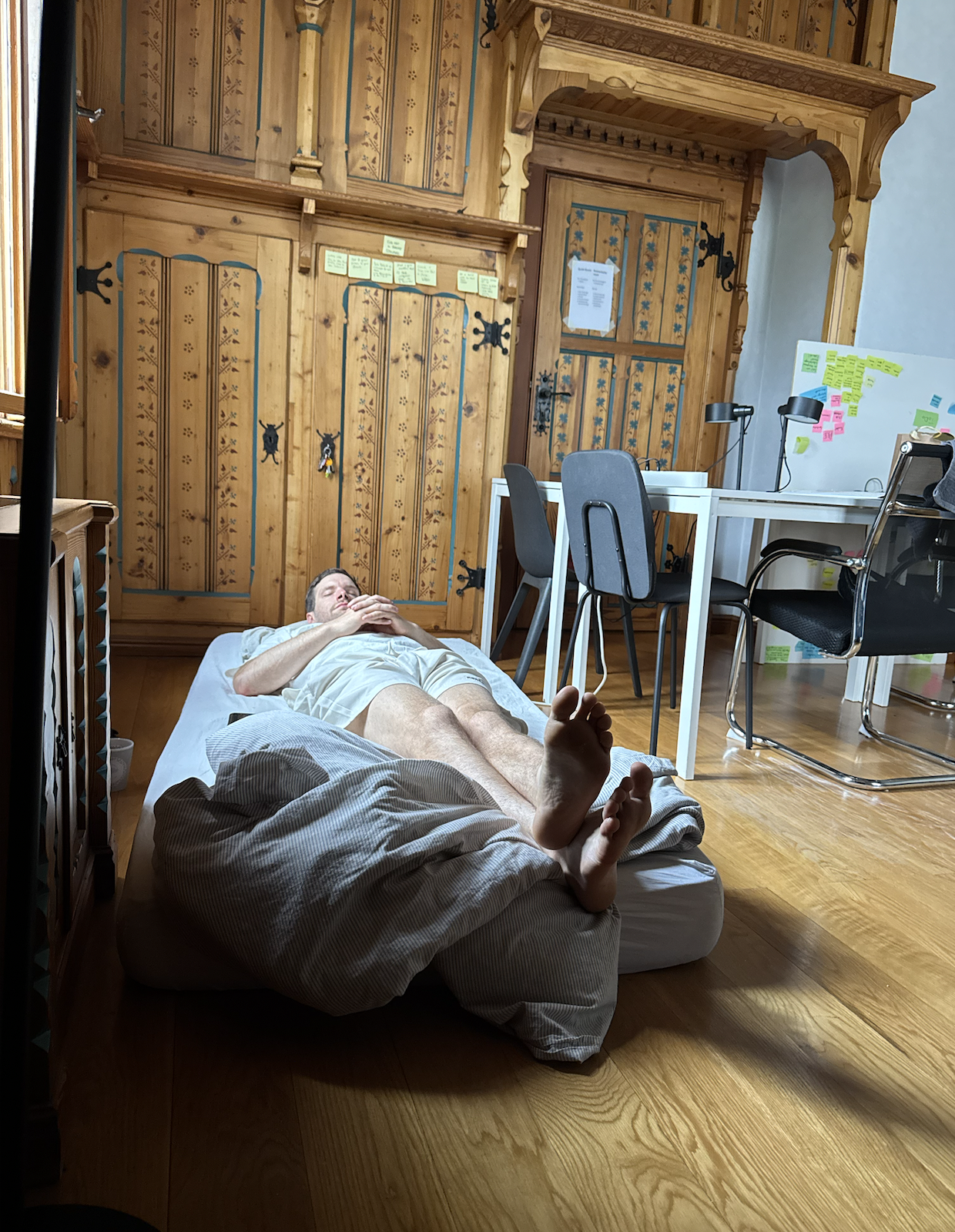
Thomas didn’t fund me with cash. He funded me with substrate: in person time, space, and allowing me to focus on learning as much as I can. When I decided I wasn’t “just a muralist” anymore, he let me go all‑in at YETI. For about 16 months I was basically living in the Möckel‑Villa in Dresden – one of the oldest and most beautiful villas in the city – like a premium homeless person: 90×200 mattress behind the couch, oats and bananas, noodles, pending bills, and a neogothic wooden ceiling above my head.
That tension made my brain hyper‑productive. Because Thomas kept the doors open, I could:
learn from him design thinking deeply
build and refine the MonoSerie method
run all the trials and errors in a very short time
prepare the art and the shows instead of taking random jobs
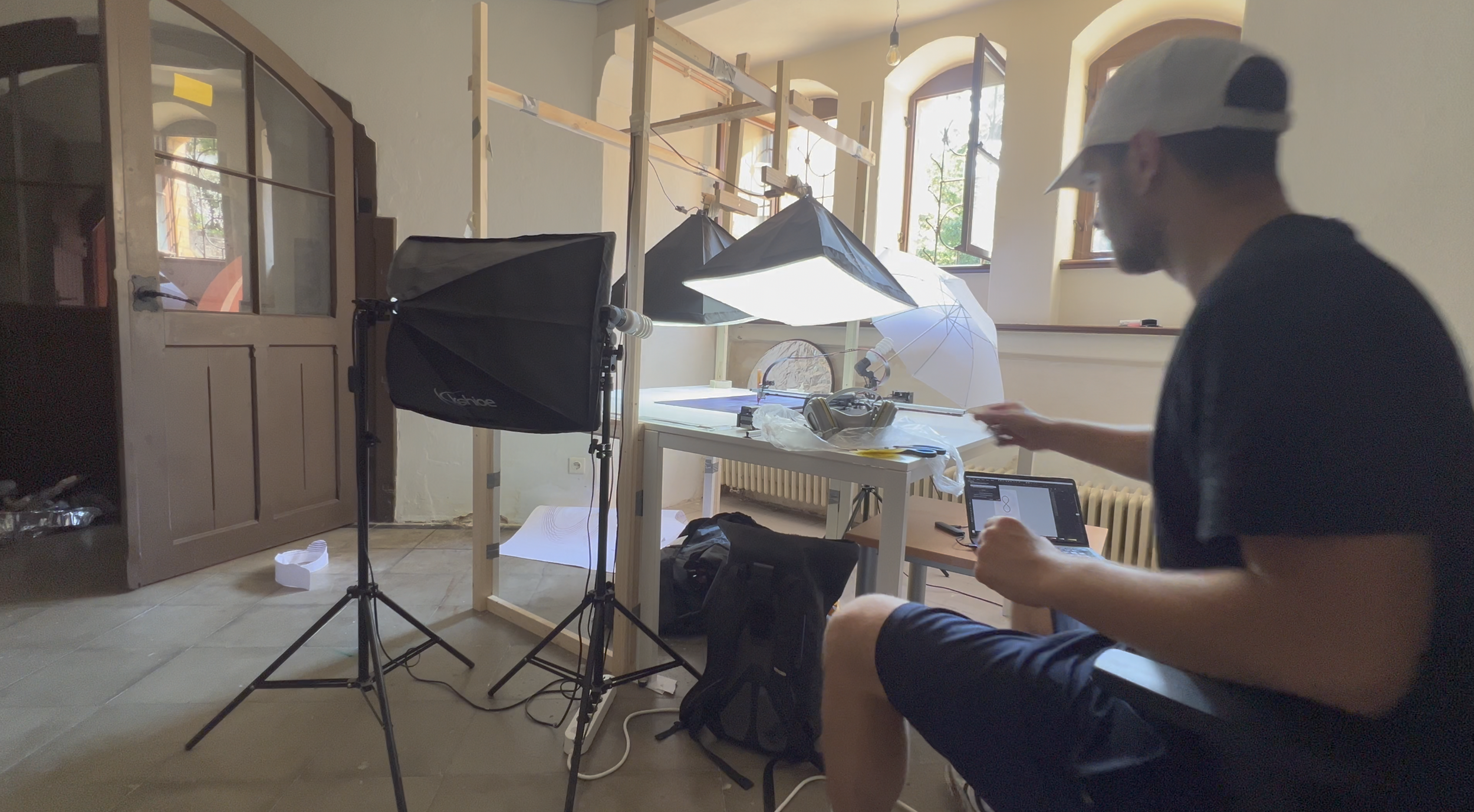
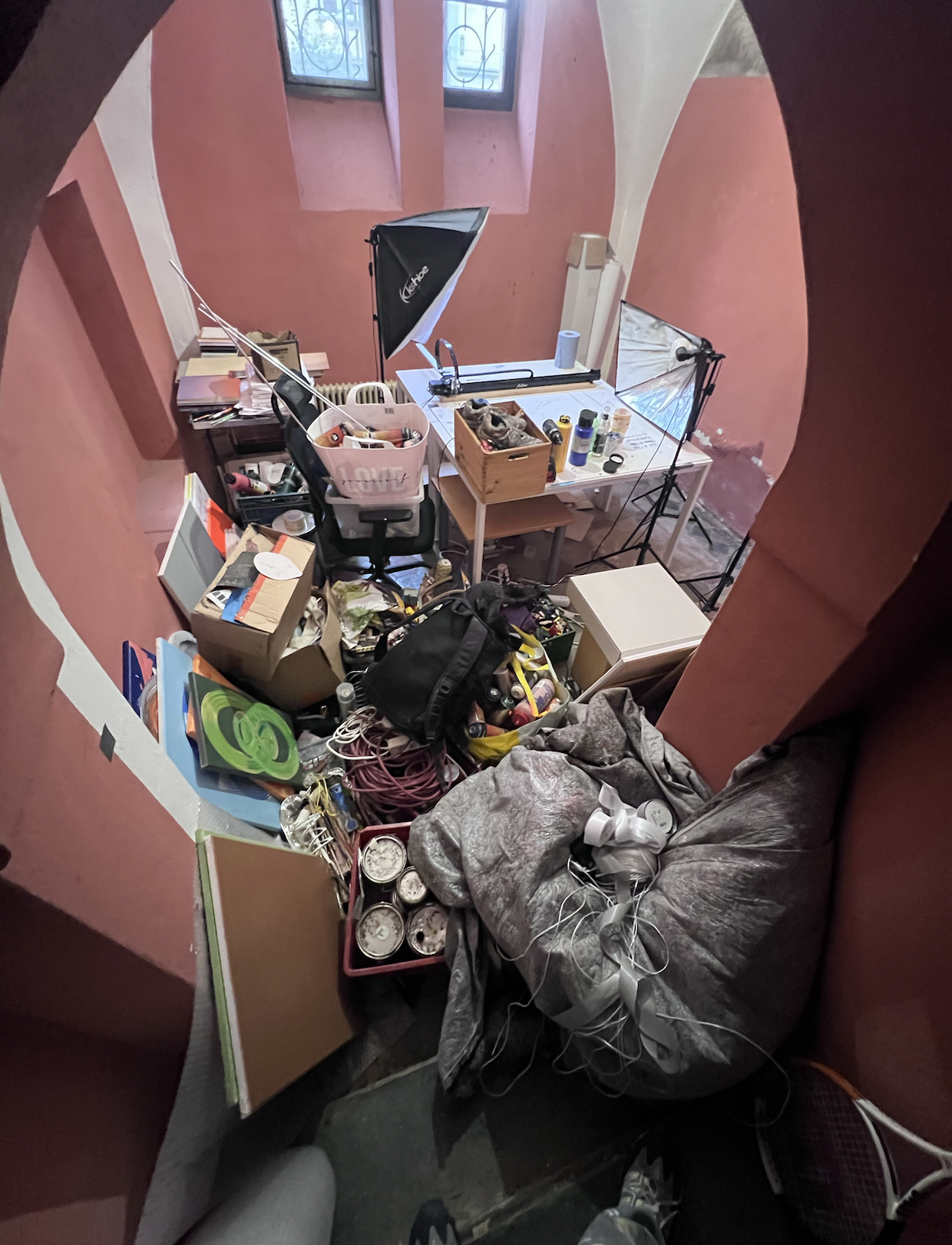
He backed me not just once, but again and again – always giving me another trial, another chance to do the “next foolish thing.”, to mess the Headquarter Makerspace and every other room for the sake of prototyping up. I’m grateful he bet his time, his villa, and his network on an art student with a robot.
He paved the path that made everything after even possible.
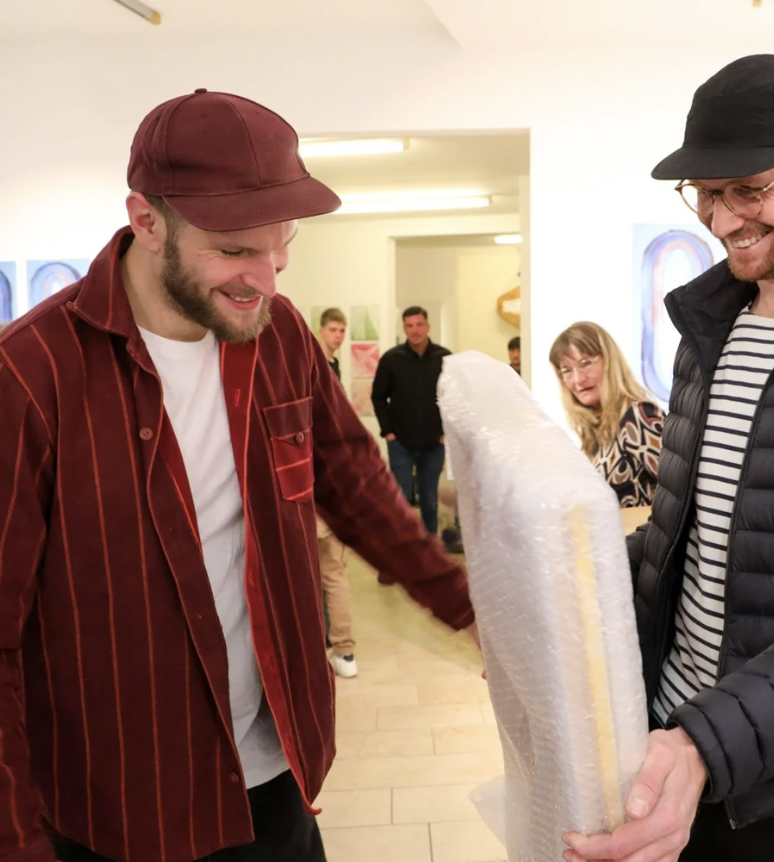
My second mentor & business angel and collector of my work is Hans Hochkeppel (Industrial Designer, Head of Design & UX at ProGlove, Co‑Founder of ProGlove), part of the OMA Business Angels investment team and mentor for scholars at YETI Dresden.
A warm, cool, relentlessly curious guy with a literal multi‑tool in his pocket… he’s very real‑world.
He put the AxiDraw I use for MonoSerie into my hands as a permanent loan and bought the first MonoSerie ever sold in my online shop. He invested hours of his spare time in me – between meetings, or even calling me from a car outside a hotel in the Caribbean while his family was asleep. I was all‑in, and he met that with the same energy.
When I drowned my MacBook while preparing the Emotional Capital show, he simply sent me his old one. He came to my gallery show at Galerie Holger John – KI, Mensch und Malerei – and bought more paintings there.
His first impulse was simply curiosity:
“What happens if you give an art student a robot?”
Because he thought the tech was cool and the opportunity interesting, he planted a seed. That seed has been growing ever since – into more art, braver cultural experiments, and increasingly ambitious economic endeavours.
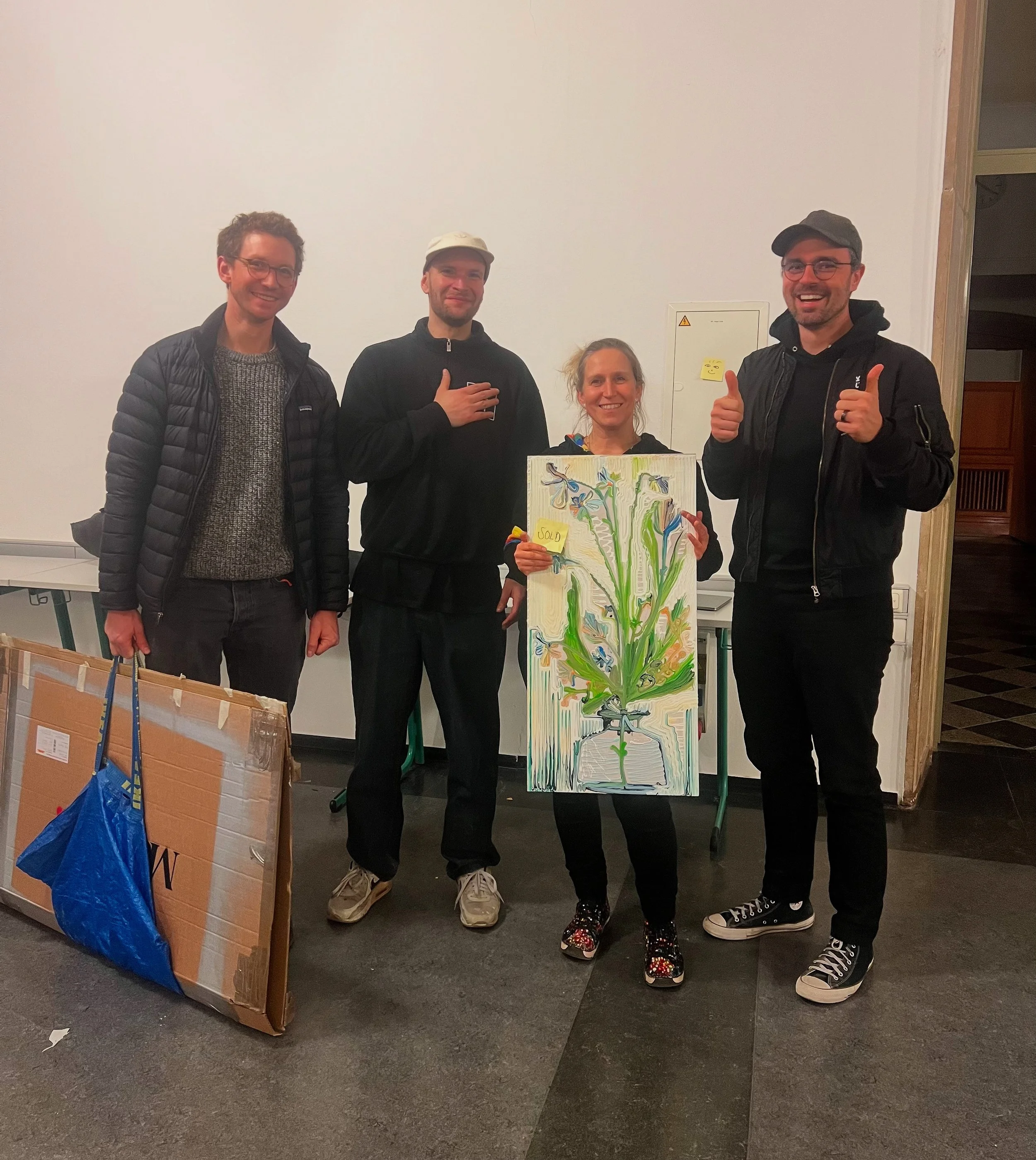
My third mentor & business angel and collector of my work, is Alex Grots, who:
has built and exited real companies,
comes out of the IDEO / design‑thinking world,
now spends a lot of his time backing and shaping the next generation of founders (like me) through YETI, EWOR, and projects like House of Beautiful Business.– a deeply inspiring person.
I get to learn 1:1 from him inside the Youth Unmuted project we’re showing 2026 at the House of Beautiful Business. He made my participation possible and covered all costs.
Thank you, Alex.
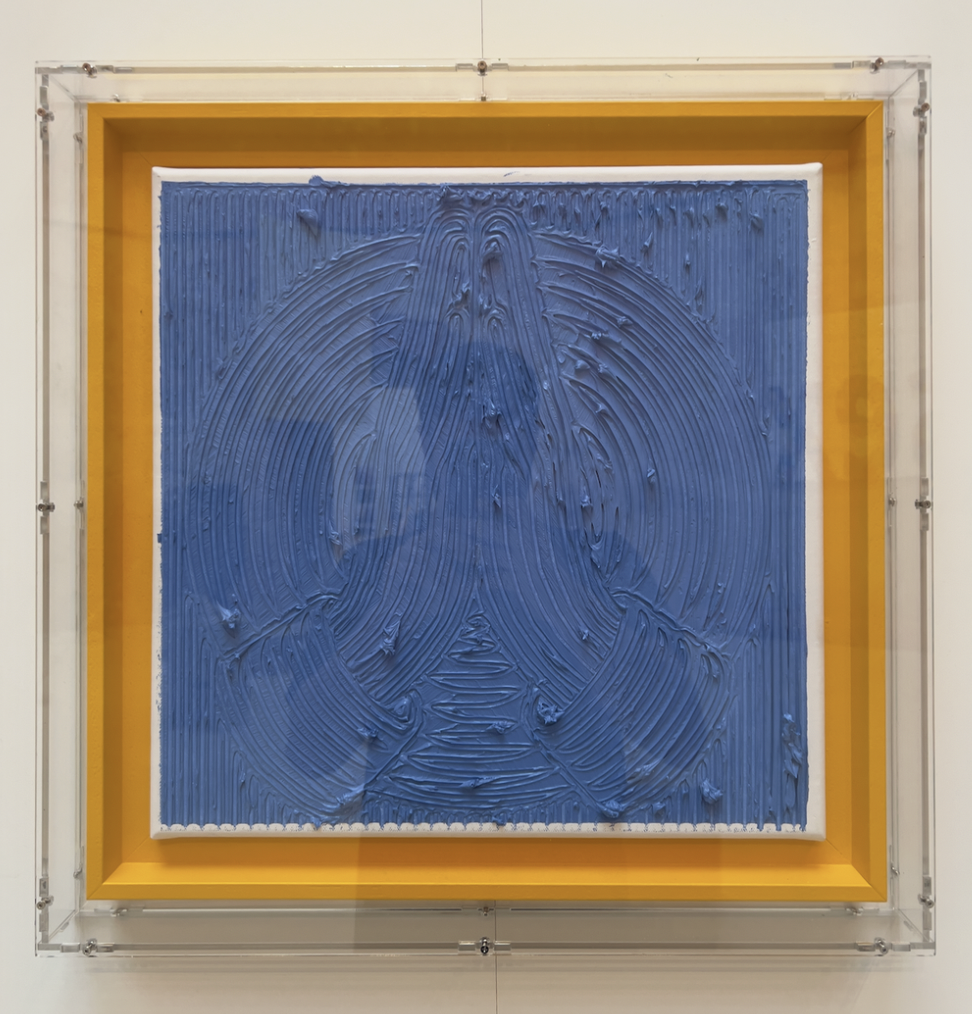
Inside the Oktogon Dresden under the Dome you see folded‑hands emoji, framed like a classical icon. It was shown from the very beginning of the diploma process as a central piece of “Emotional Capital”, priced at 500 €. Two more collectors bought the same motif during the show.
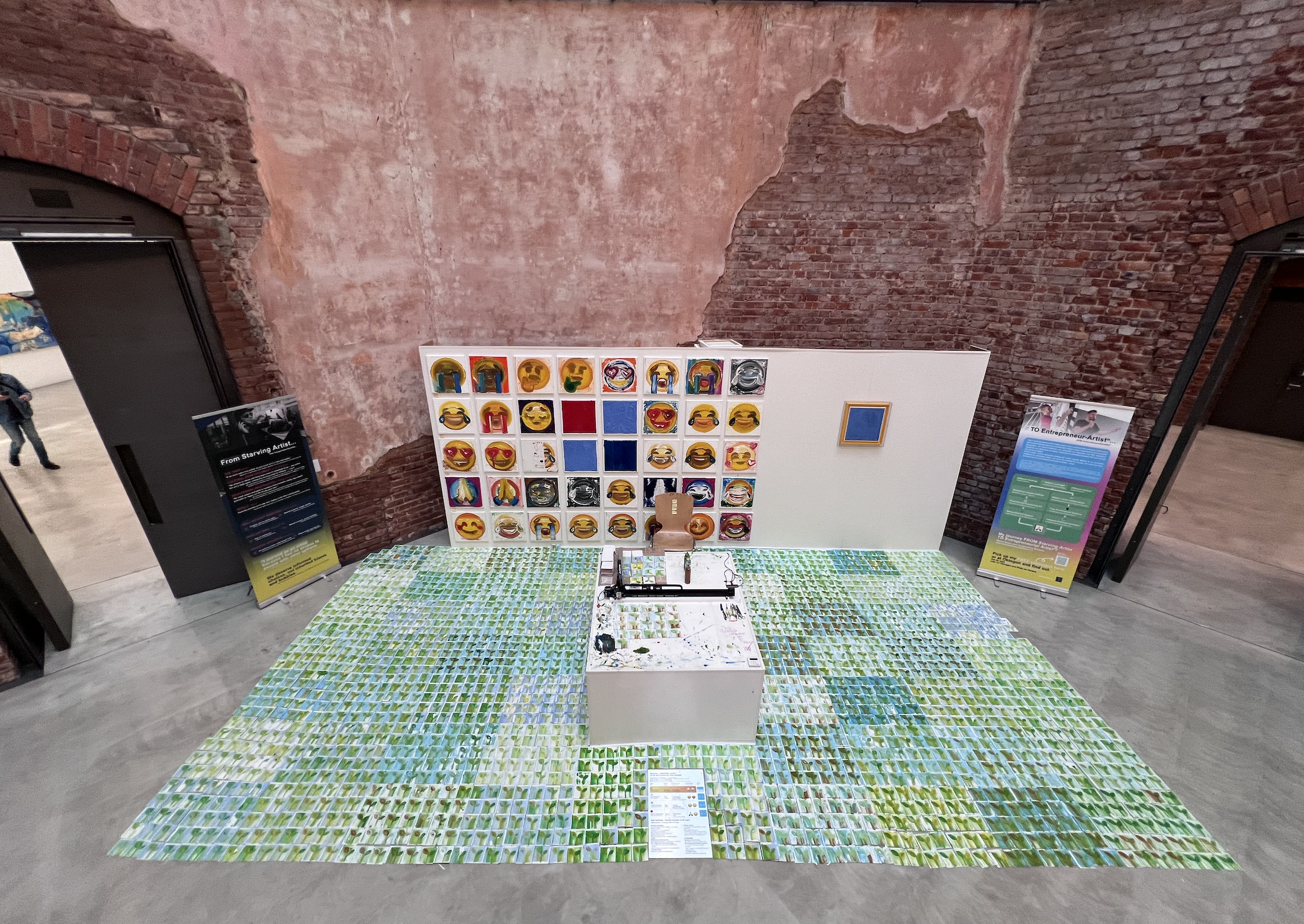
One of those first emoji pieces went to my business angel and art patron, Alex Grots. With 8,000 € of backing, he made the whole MonoSerie diploma possible: 2,300 serial uniques, the gallery with Holger John that followed, the catalog, and The New Olympia. Eight thousand euros plus my energy. Without that substrate, none of this work I did could exist.
Alex was my mécène in the art world and my business angel in the startup world. The folded‑hands emoji is my way of saying thank you – and a reminder that behind every “brave” art project, someone quietly pays the bill so the work can go on.
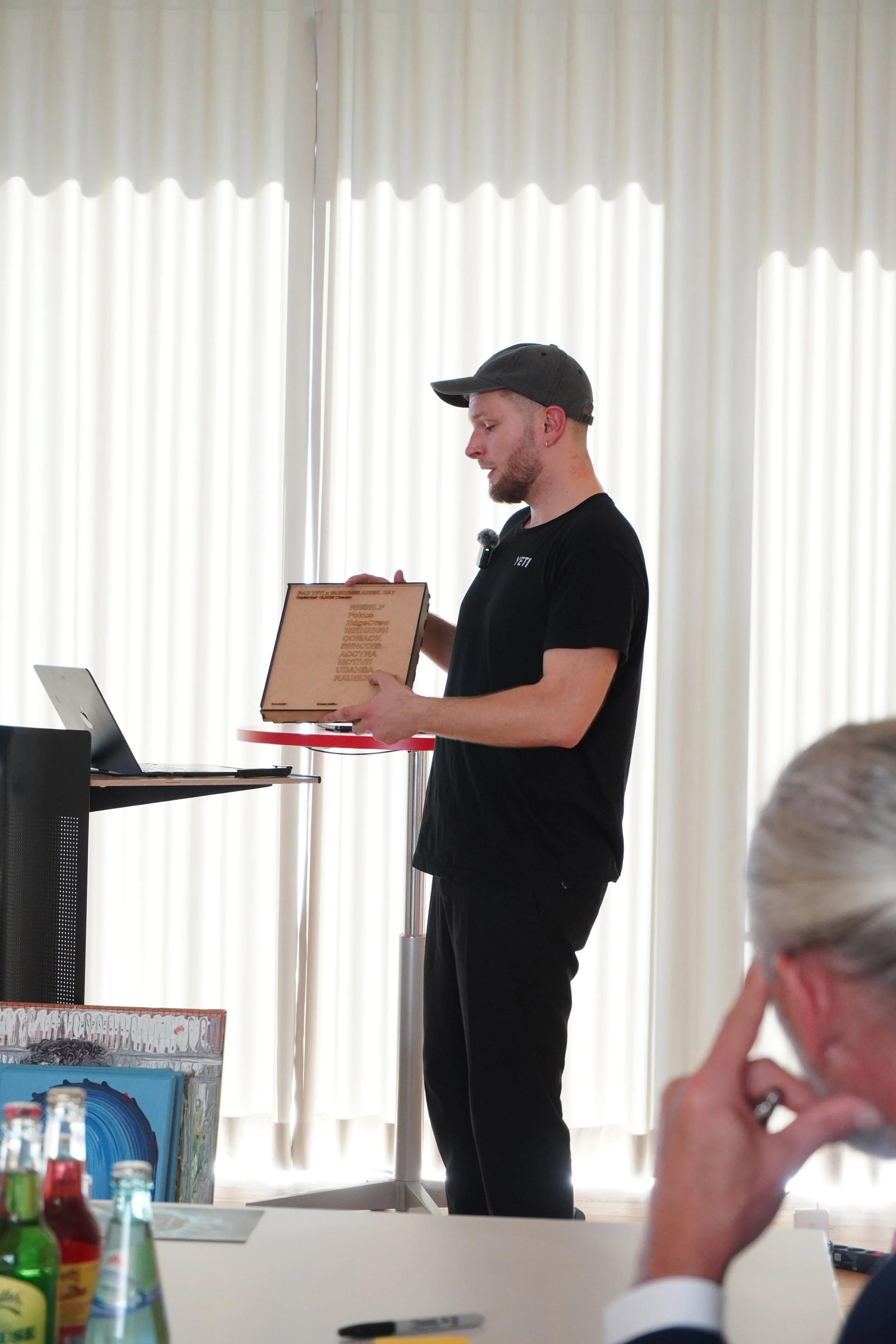
At the BAD YETI x Business Angel Day
Friday, 19 September 2025, 10:00 a.m.
Sparkasse, Elsasser Straße 6, Dresden
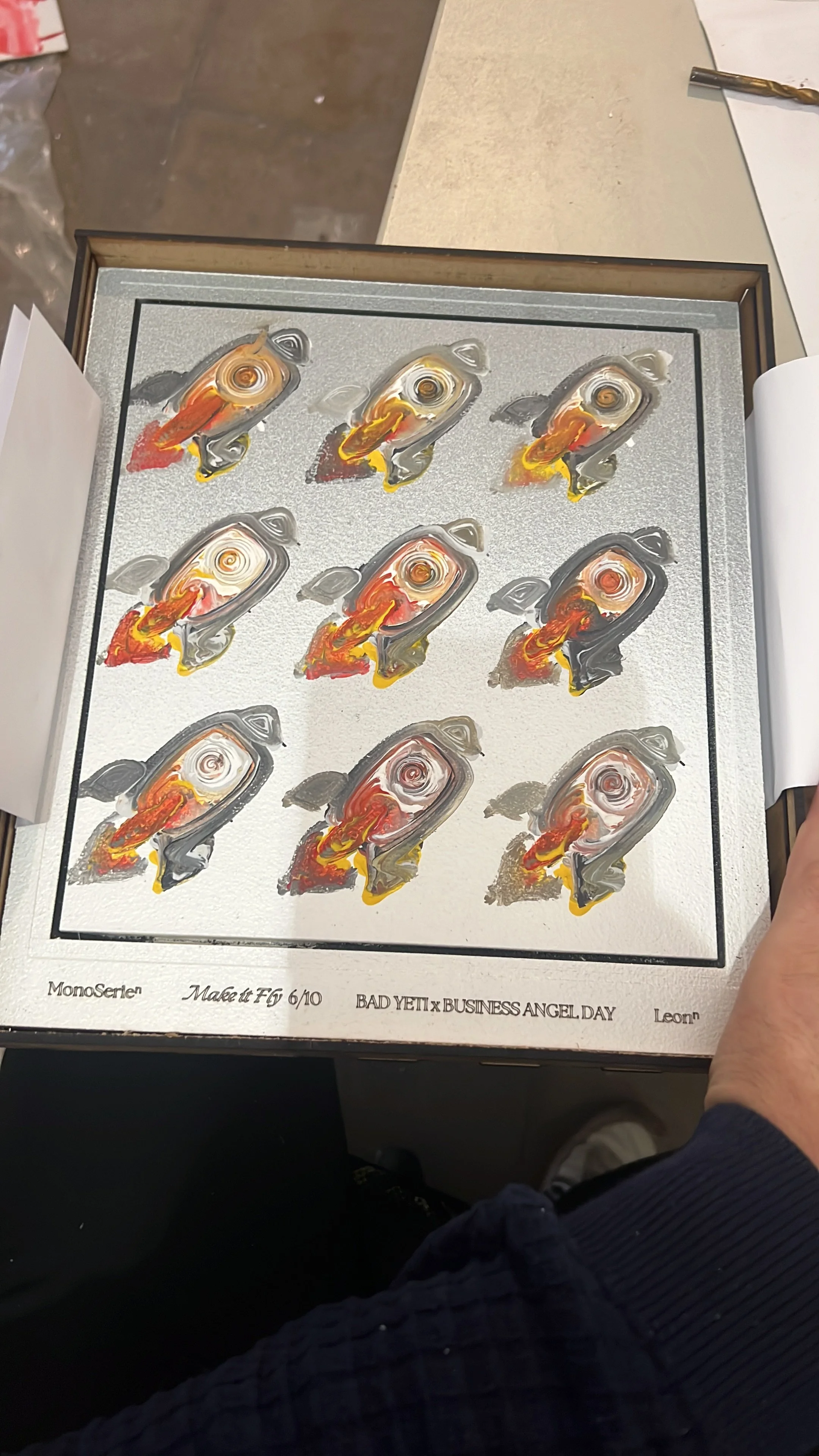
I decided to create a limited piece:
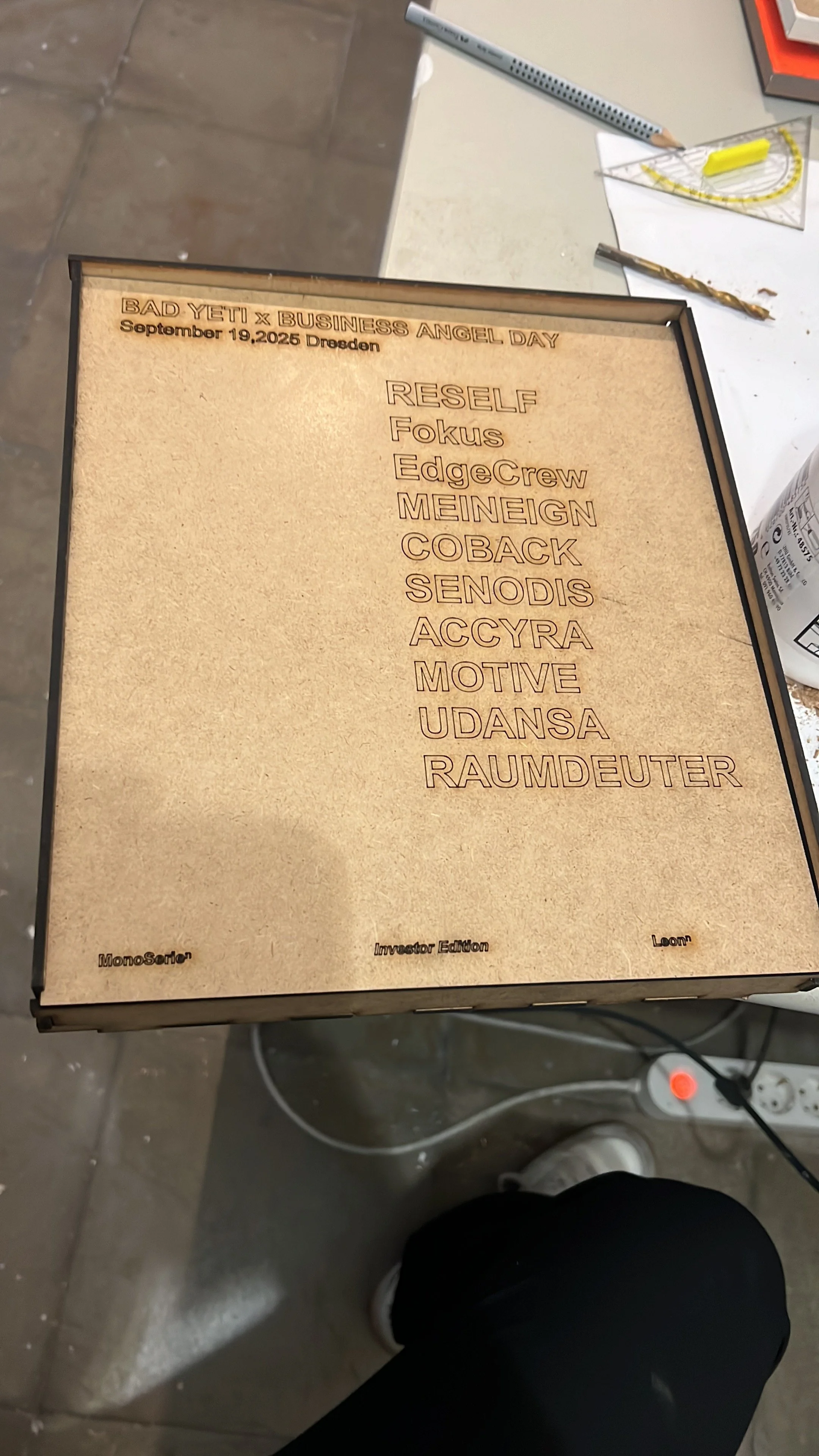
10 editions for 10 business angels.
The work showed nine rockets and was titled “Make It Fly” – representing us Yetis collectively. We gifted it as a gesture of appreciation for the business angels’ time, feedback, and resources.
Startups that pitched:
ReSelf
Fokus
EdgeCrew
MEINEIGN (mine)
Munay
Coback
Senodis
Accyra
Motive
Raumdeuter
Abyssus
Low substrate → low surface.
It took me a while to turn that observation into a fundamental law I now deeply respect:
Low motivation → no output on the surface
Low energy → no visible motion
Low skill → no great artworks
Low social skill → no strong mentors, no network
Low margins → no time to experiment, no risky pieces
In art this is brutal: if the substrate collapses, the work never leaves the studio.
That’s why I work with business angels and patrons: they strengthen the substrate so the robot can keep painting, the shows can happen, and I can take bigger risks on the canvas.
If you support MonoSerieⁿ, you’re not just buying a picture.
You’re funding the conditions that make the next, braver work possible.
The Economic Substrate Behind My Art
I don’t pretend money doesn’t matter.
I use it as a tool—to get higher quality art, and often also more, art—because it gives me the time and materials I need.
Over the last years I realised there are two layers in my work:
Substrate layer: time, energy, money, tools, space, mentors
Presentation layer: paintings, speeches, shows, “genius” moments
If the substrate is weak, the surface dies. That’s what these laws I thought together, are about.
Law 2 — The Economic Substrate Law
Good work can only persist on top of a viable economic substrate.
Formal:
Profit = Revenue − Cost
S_surv = Profit ÷ Burn
Capacity for future work quality:
dB/dt ∝ (S_surv − 1)
So:
If S_surv > 1 → dB/dt > 0
Your capacity for better work increases over time.If S_surv < 1 → dB/dt < 0
Time, energy, and tools disappear over time.
Order of causality:
Numbers → Conditions → Presence → Quality (Beauty & Function)
Work quality over time:
B(t) = f(S_surv(t))
F_fun(t) = g(S_surv(t))
Interpretation:
No economic surplus → no conditions for deep, consistent work.
Ignoring the numbers doesn’t make you “pure,” it makes your work fragile.
Law 3 — The Baseline Coordination Law
Invisible numbers coordinate visible work.
Let:
T_focus = focused hours you actually have
Rest = real rest hours
Cond = conditions (time, focus, rest, tools, space)
Then:
Cond = g(S_surv) // economics → conditions
Q_out = h(Cond) // conditions → visible work quality
If S_surv drops, Cond degrades, Q_out falls.
Extreme case:
If T_focus < T_required ⇒ Q_out → 0
The project never ships.
Interpretation:
You don’t get consistent, deep work out of someone broke, exhausted, and stressed.
Budgets, margins, sleep, and room rent are not “boring admin,” they are creative constraints.
From “Starving Artist” to Leveraged Artist
These laws are my way out of the starving artist myth.
The starving artist script is simple:
low agency
low ownership
no clear stakes
wait to be discovered
complain about “the system”
That’s the same pattern we see everywhere in youth right now: highly educated, highly aware, but trained to wait for structure, rubrics, and permission. Great for school. Terrible for building anything real.
If Law 2 and Law 3 are true, then the artist has to shift identities:
From:
“Starving artist ↓”
ignores money
hopes for grants
says yes to everything
has no buffer, no margin, no time
creates when there is “inspiration” left over
To:
LeveragedArtistⁿ
treats economics as part of the medium
builds substrate on purpose (patrons, angels, offers)
names, frames, pitches the work
asks directly and gives value back
uses margin to buy time, tools, and risk for the next piece
High agency instead of low agency.
Clear incentives instead of vague hope.
Grit + structure instead of romantic chaos.
In that sense, these laws are not just about my studio.
They’re about the bigger pattern we all live in:
If we stay in “starving mode” – as artists, as youth, as citizens –
we get fragile work, half‑finished projects, and no real seat at the table.
If we build substrate and take ownership, we can actually shape what comes next.
MonoSerie, my business angel, the gallery shows, Youth Unmuted – all of that is me testing one idea:
Stop waiting to be saved by taste or luck.
Build the substrate, claim the mic, and let the art stand on something solid.