Emotional Capital -
Was a worker‑identity dying, a system‑owner identity born, and a question left for the viewer:
What does work mean when effort collapses – and what did we seed while we were being used?
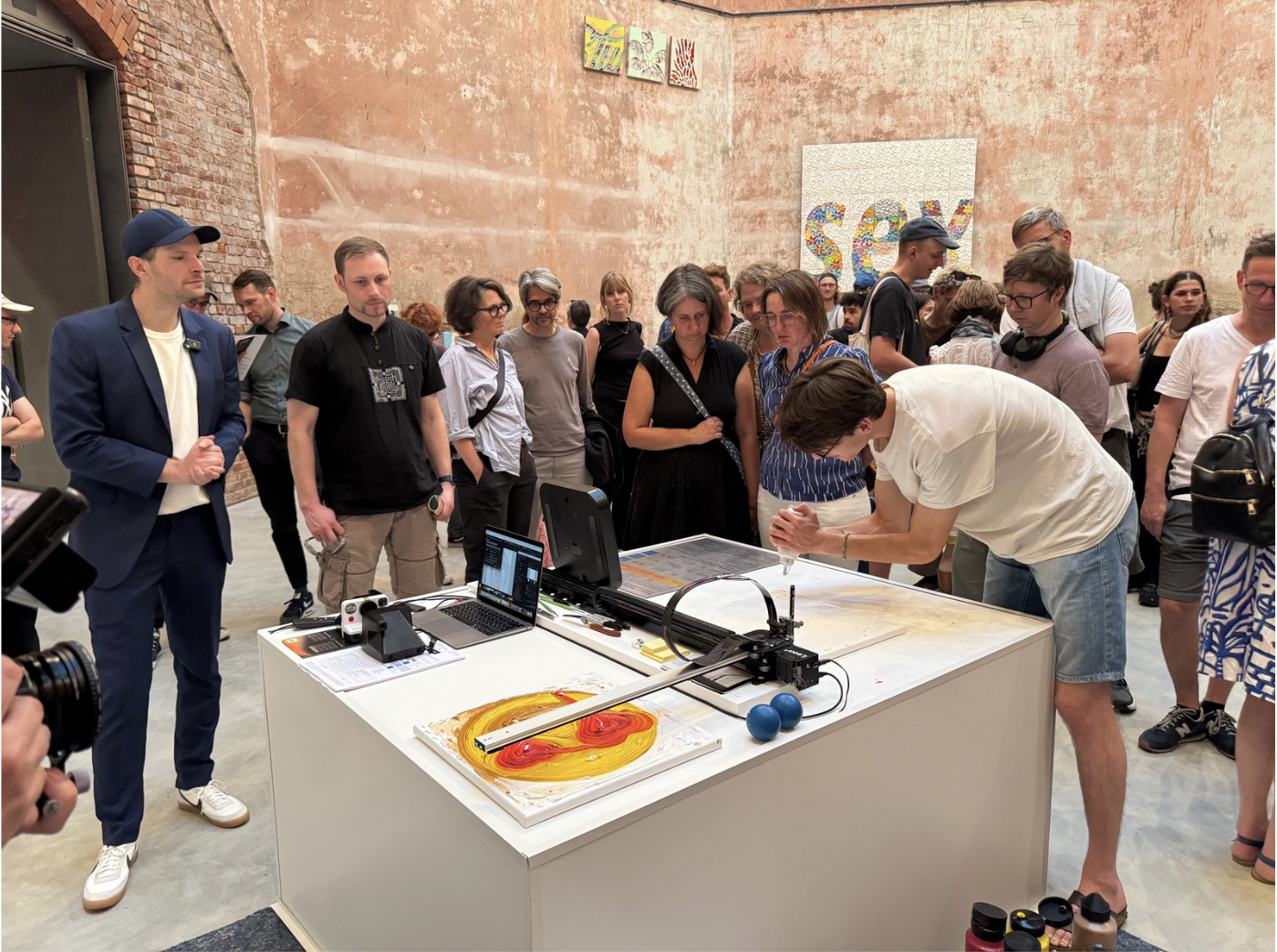
I exhibited my diploma work “Emotional Capital” inside the Oktogon in Dresden, the central exhibition hall of the University of Fine Arts Dresden (HfBK), located directly beneath the iconic glass dome known as the “Zitronenpresse” (“lemon squeezer”).
I studied in the class of Prof. Christian Sery. The work was shown as part of the exhibition “42 Diplomanden” from 25 July to 7 September at Brühlsche Terrasse 1, open Tuesday to Sunday, 11:00–18:00.
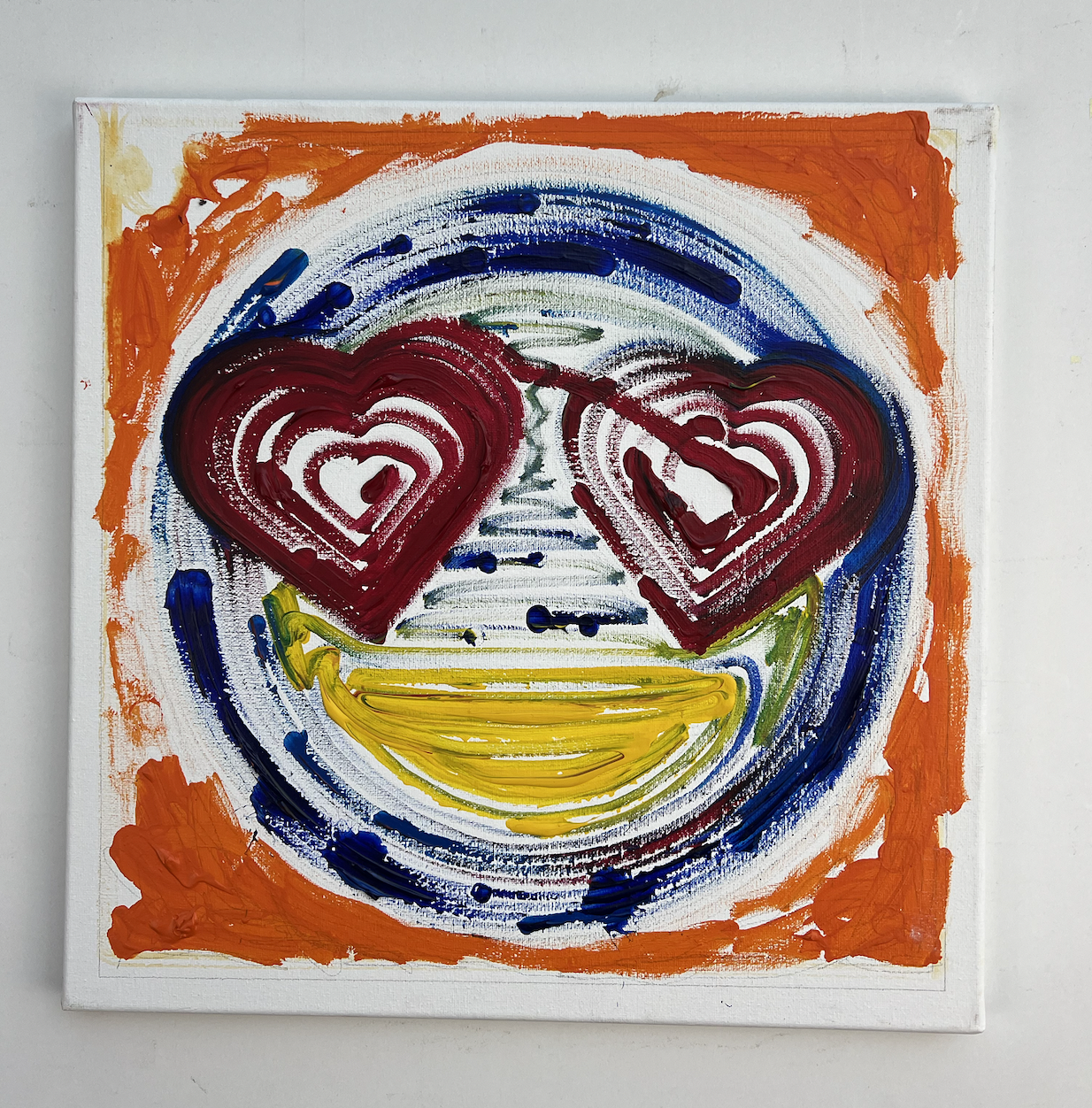
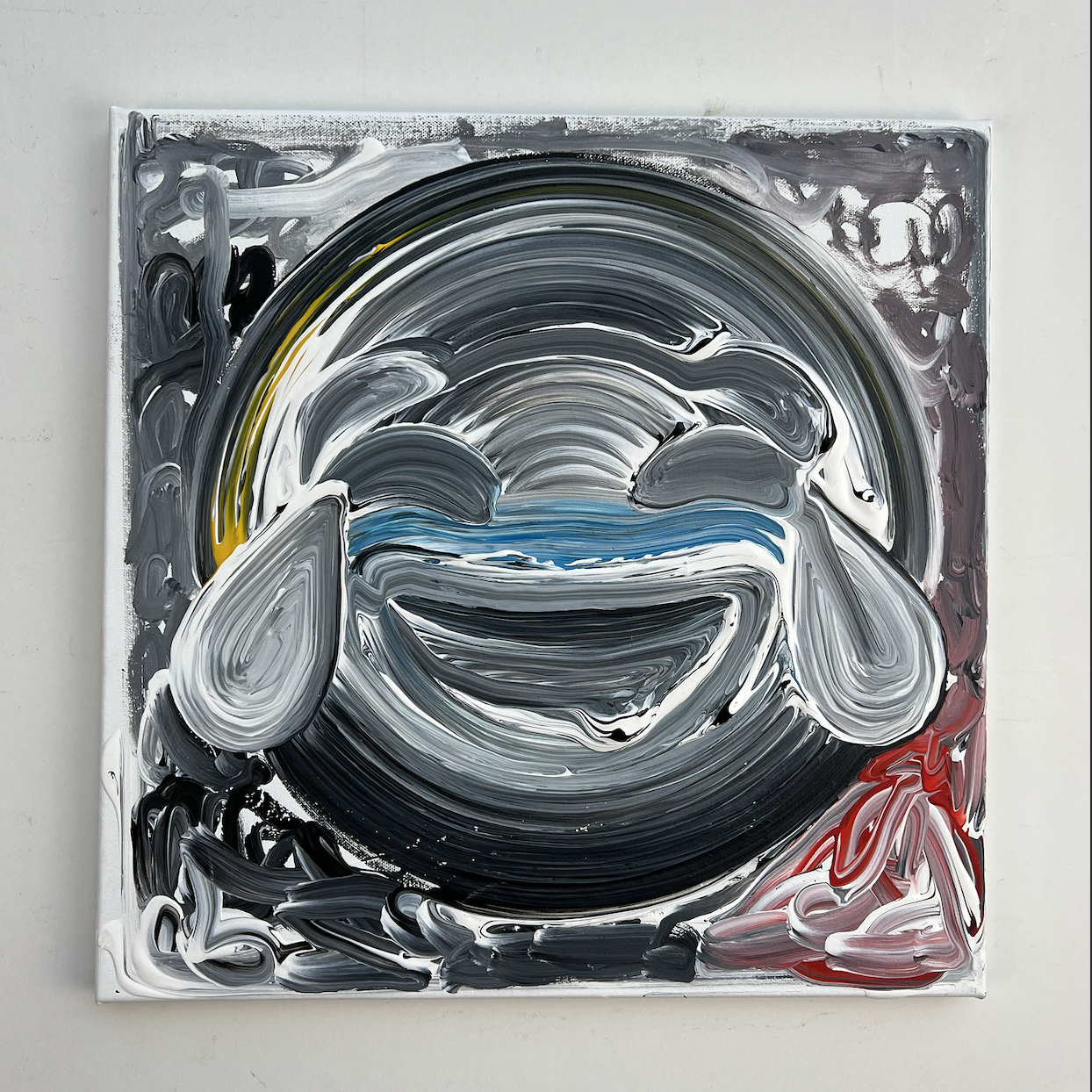
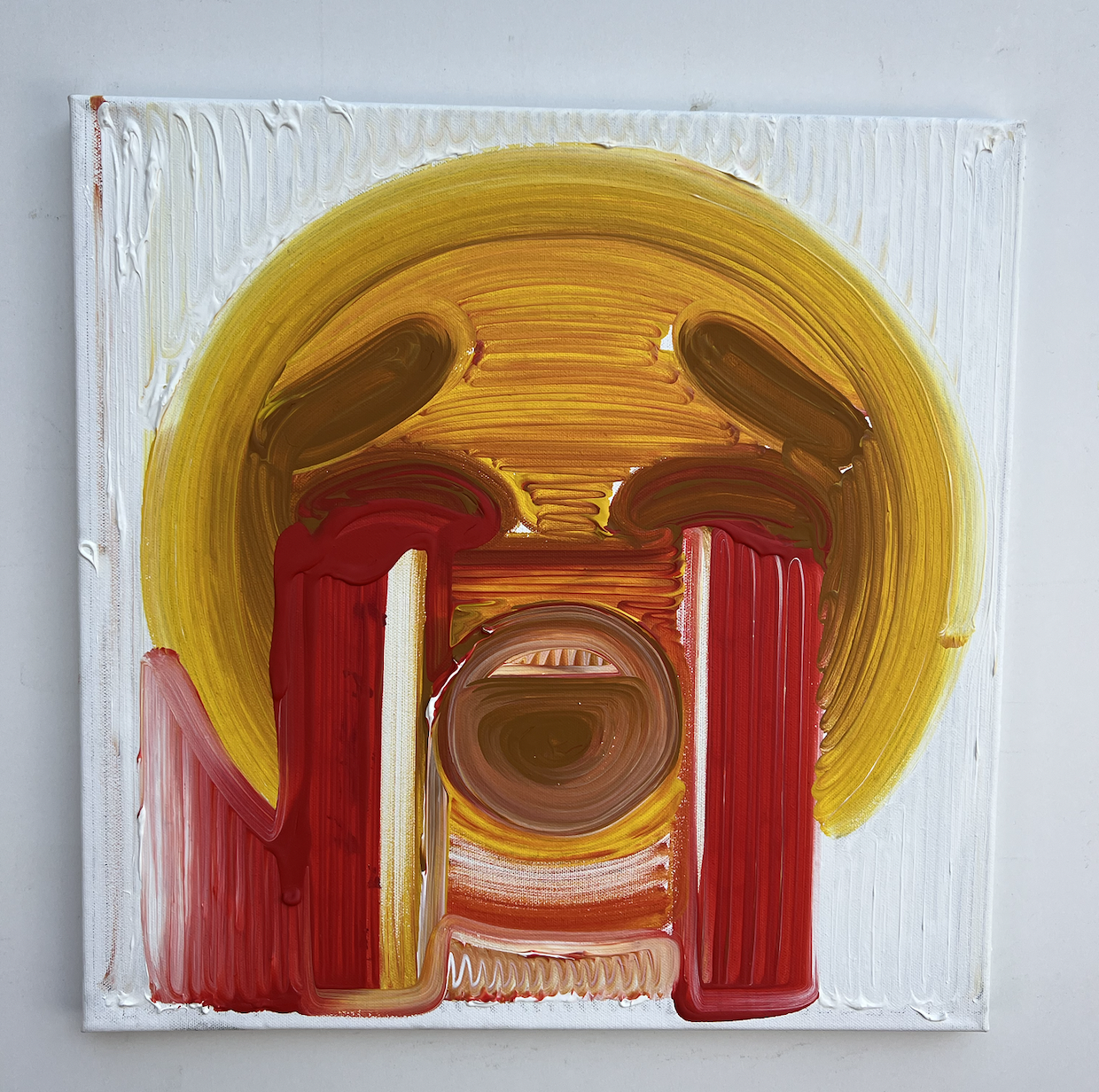
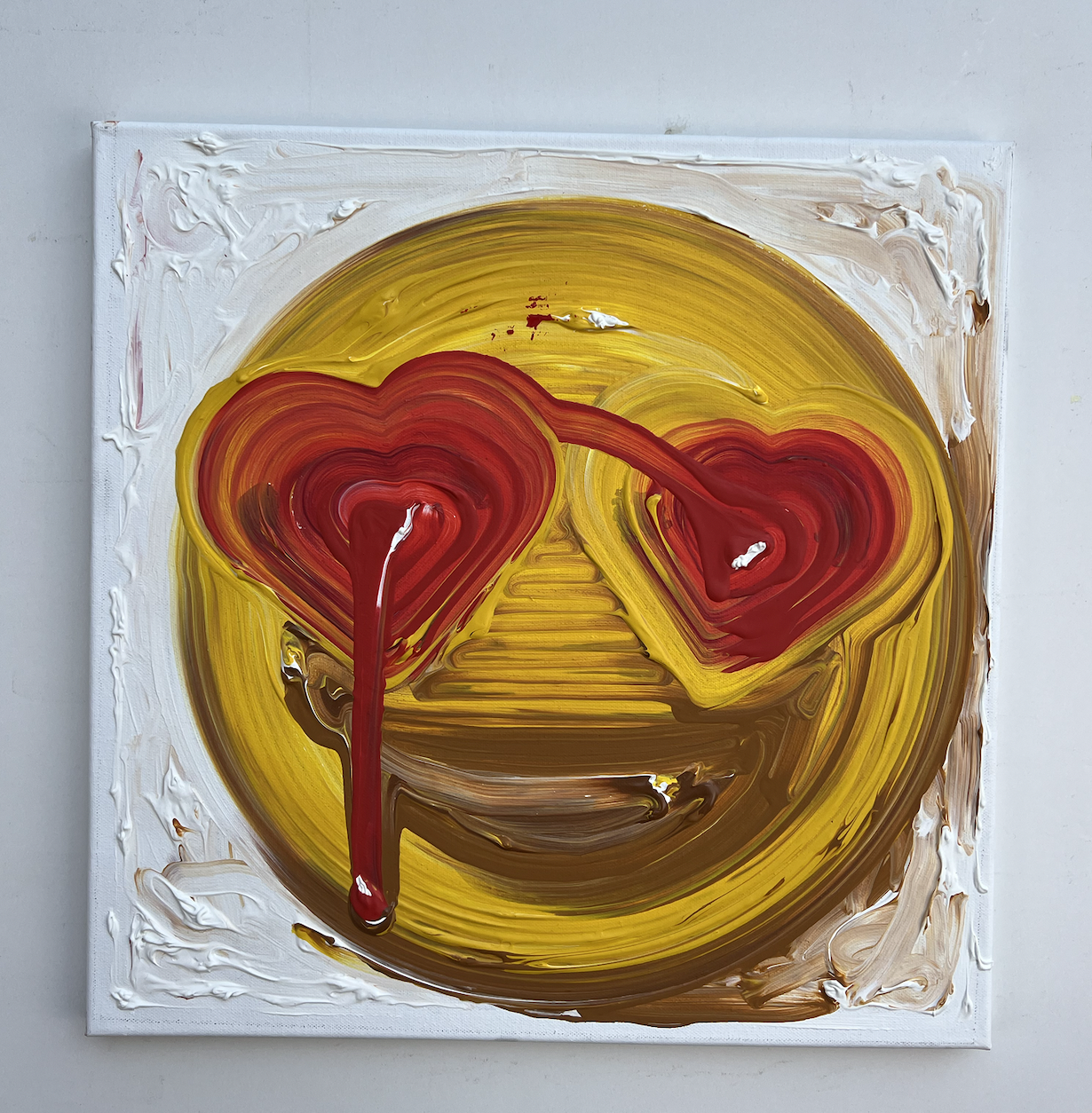
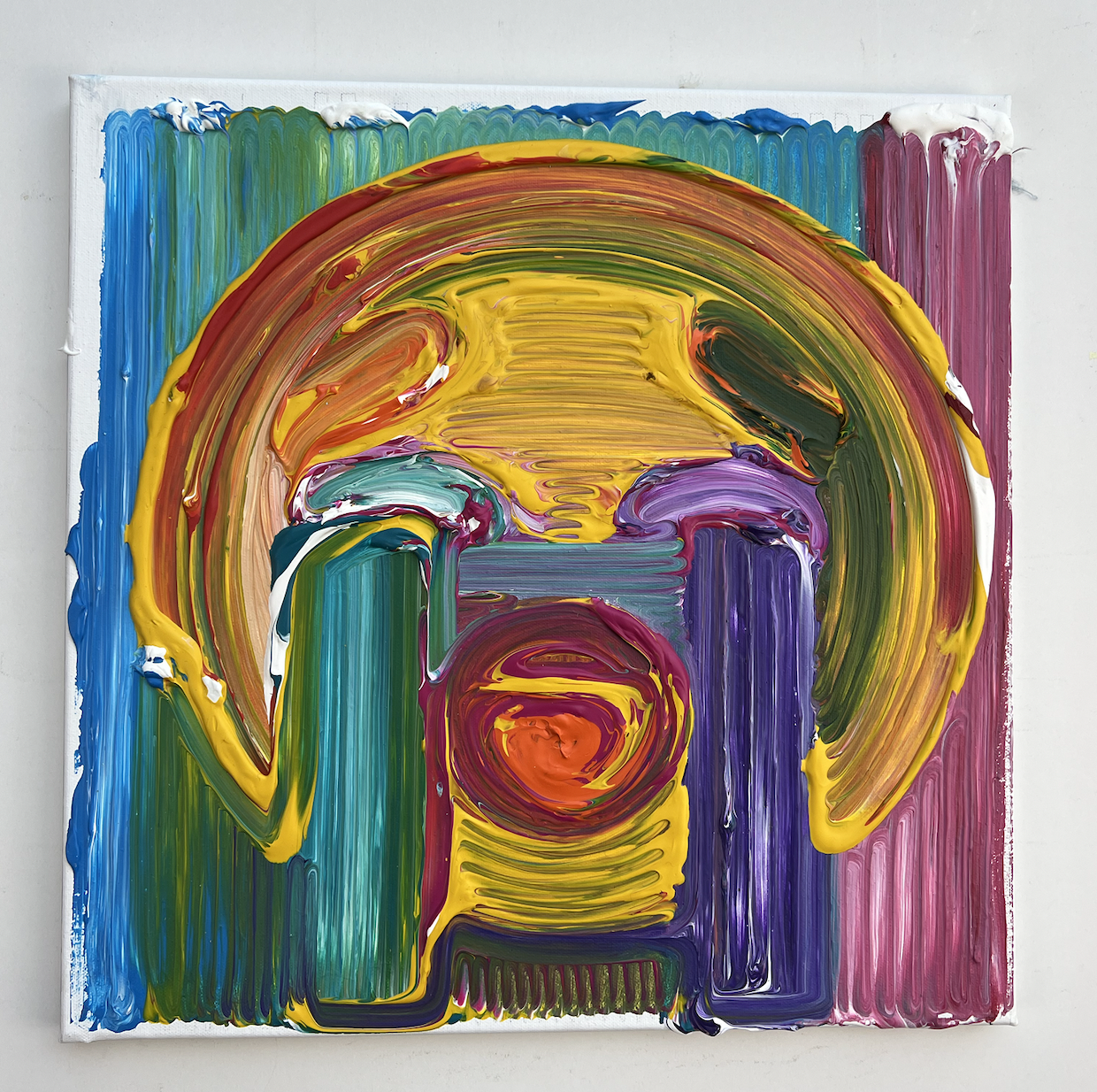
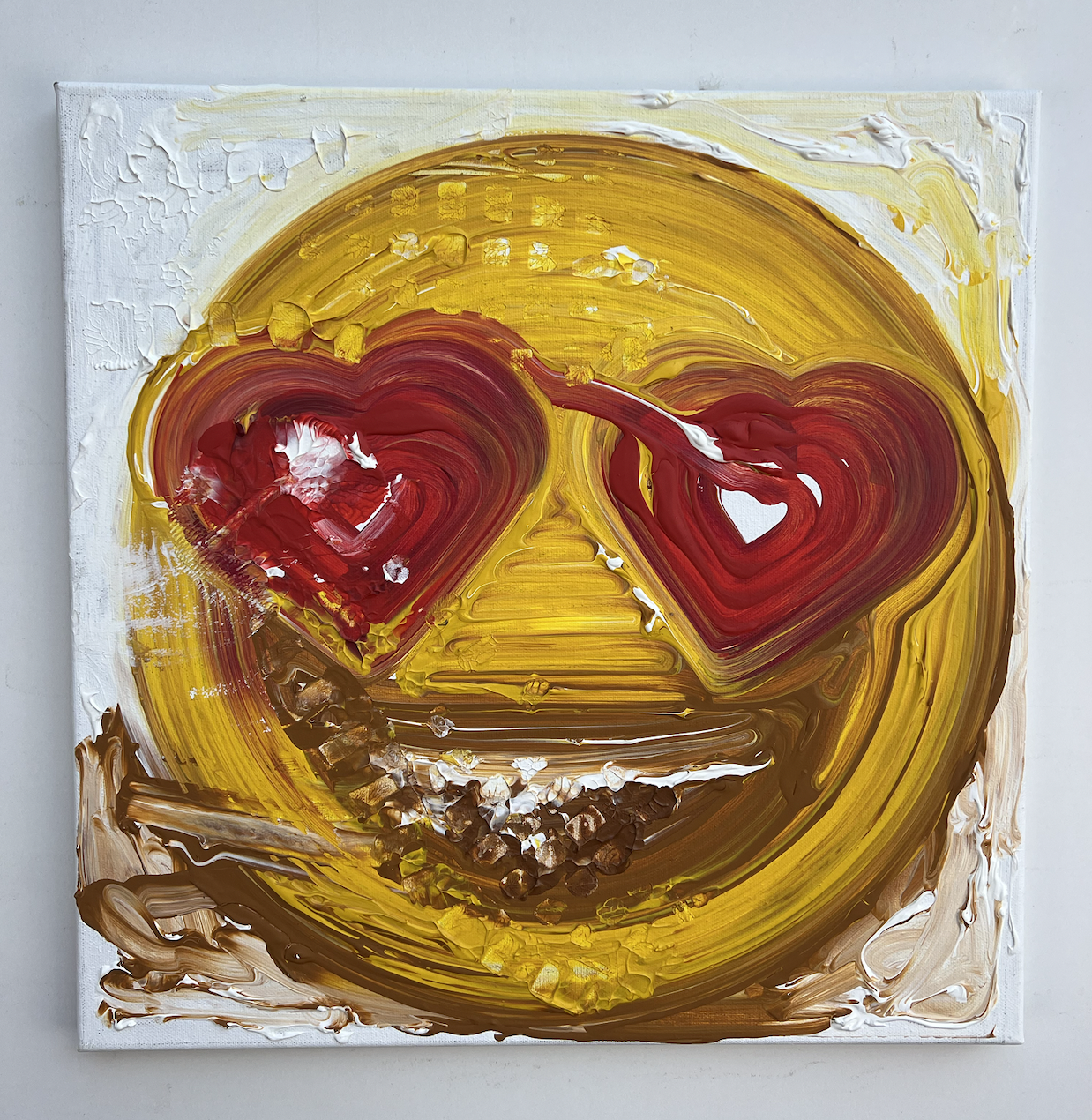
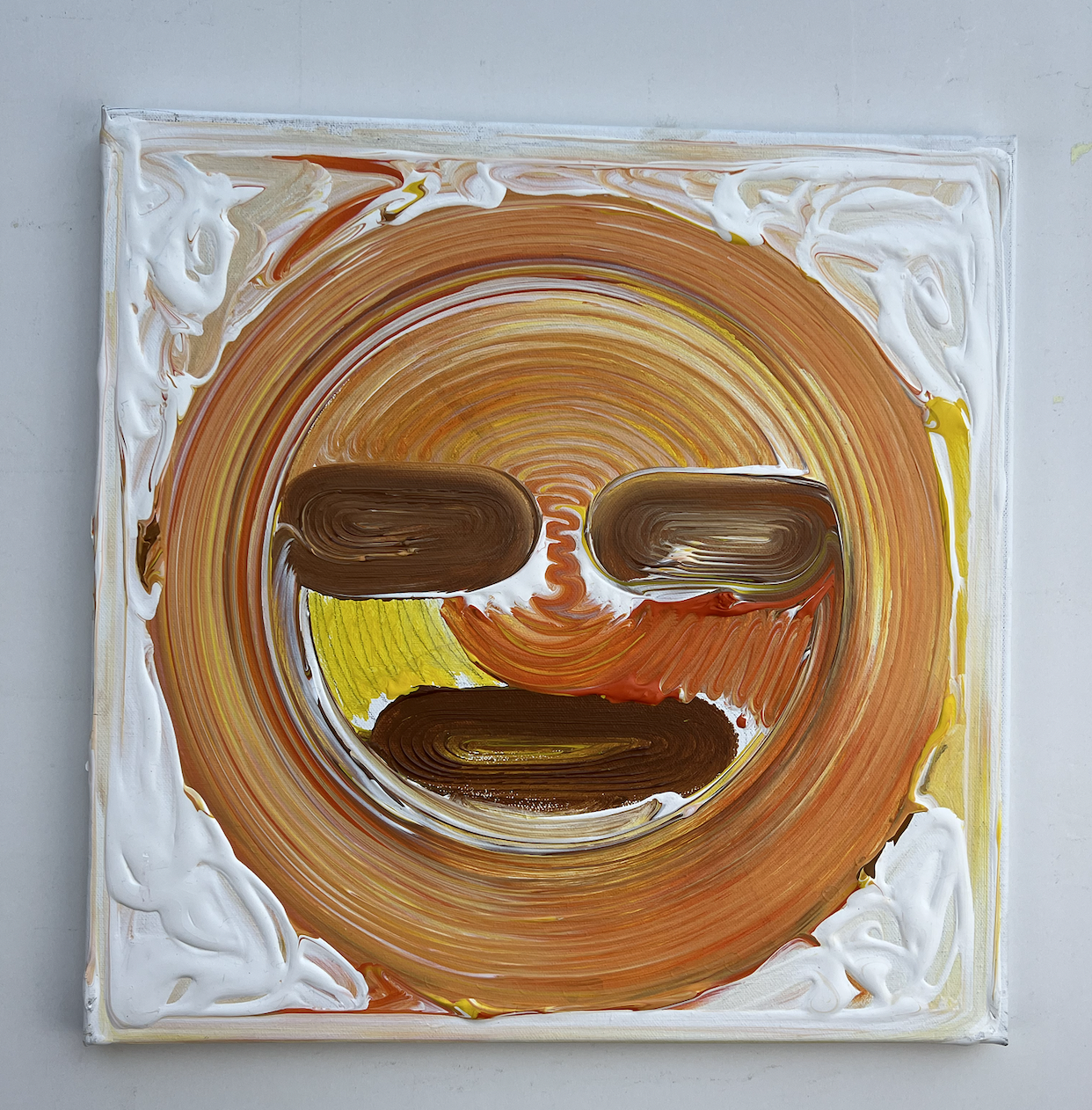
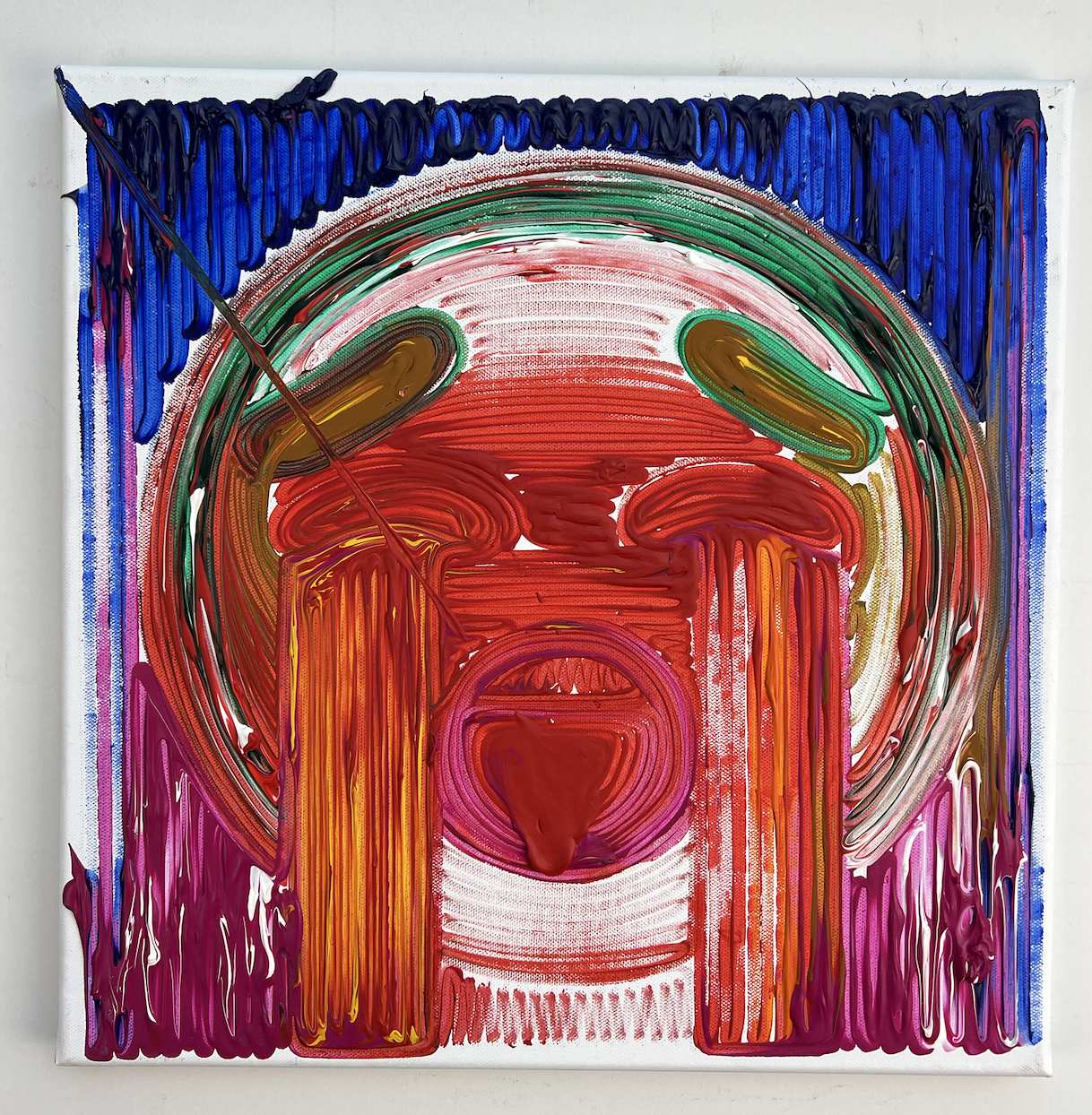
How did I get here?
I started painting walls at 13.
By 25, I was a photorealistic muralist at my peak — big facades, big budgets, big scaffolding.
And I walked away.
Money:
Someone once showed me 50k in cash and had no idea what to do with it. No leverage, no time, still grinding. That was my future if I stayed: high effort, low freedom, no system.
Body:
One near-accident on a scaffold, one spray can dropped from 20 feet with no helmets on. I realised: my body is my most precious asset, and I was gambling it for day rates and "cool pictures."
Head:
I was usually half-numb — parties, social media, constant noise. Bad input, bad output. Then COVID came, killed the mural jobs, and I turned into a ghost. No marketing, no system, no plan.
At the same time I joined an entrepreneurship scholarship and started therapy.
Art school at HFBK Dresden taught me how to think and practice.
It did not teach me how to ship, sell, or survive.
I've always been caught in other people's emotions. Since I was a kid I cared more about the feeling in front of me than my own. That's what emotional debt feels like: being like an effervescent tablet, dissolving into the needs and moods of others.
So when I started thinking "startup," of course I landed on emotions. Startup, in my head, meant: do something big, scalable — factory-scale. And I already knew what it feels like to be a human turned into an emotional factory.
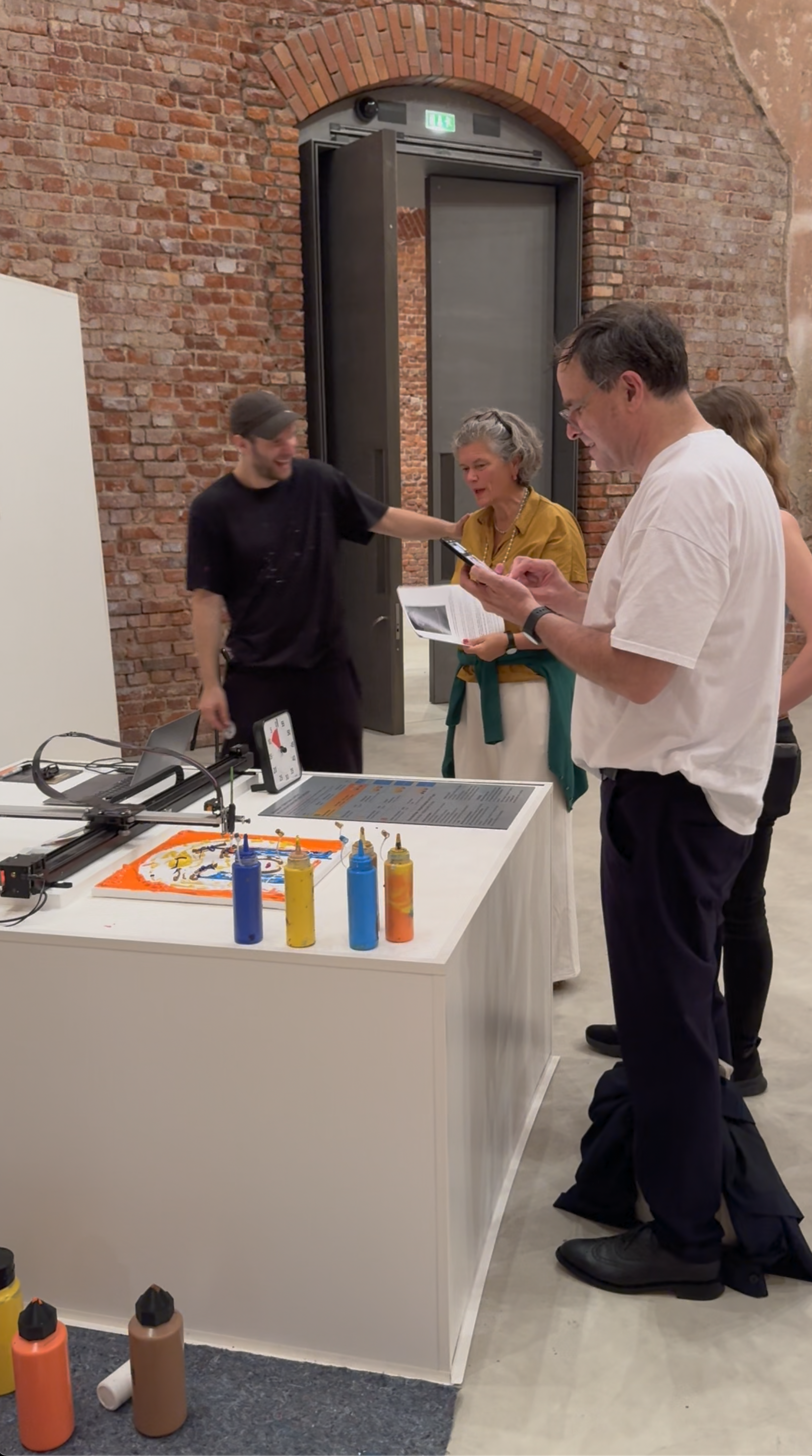
So I did the only honest thing I could think of: I imagined a way to bring that factory outside — in paint, metal, code, and visitors — to mirror the one inside me. So you and I could watch it run, reflect on it, and try to learn what it means to live in a time where our feelings are the raw material.
Through a side project on loneliness — handwritten letters at scale — we found a way to use a robot to write for us. The startup died, but the robot stayed. Thanks to my mentor Hans from YETI Dresden, the machine ended up with me at HfBK.
I didn't build the robot. I didn't code it. What I did was repurpose it: from writing letters to painting feelings. From studio practice to prototyping systems. From "more art" to category design — turning a social-media algorithm, a marketing funnel, and a sales process into an art object.
Social media, my lifelong obsession with emotion, painting since childhood, the robot as a tool, and the chance to finally do my diploma at HFBK Dresden — all of it collapsed into one room.
Emotional Capital is that room.
It's a self-portrait of a human being turned into an emotional factory. It's a portrait of a social-media algorithm, live, with paint instead of pixels. It's a portrait of marketing and sales, rolled up into an artwork: offer, funnel, lead magnet, product, delivery video — all presented as "art."
People consumed, used, and reflected on the work exactly as intended. I felt the power of leverage — and I felt as burnt out as my "franchisees," the visitors whose emotions I harvested while they consumed me.
I turned emotions into cash. I felt dirty for building a system that efficient. But it was the only honest way I knew to show what our time looks like — to me, and maybe to you.
That's what Emotional Capital is: a portrait of our time, drawn with my own operating system.
And the machine is still running.
I took my weird mix of muralist, art student, entrepreneurship scholarship kid, therapy, and robots — and turned it into one coherent system on paper before I ever hung a diploma show.
I sat down and drafted a catalogue: a 72-page blueprint of the full system. That document defined the method, the money model, the category. On the back of it I raised business-angel money and then printed 1,000 copies, which I gave away for free inside the Oktogon at HFBK Dresden.
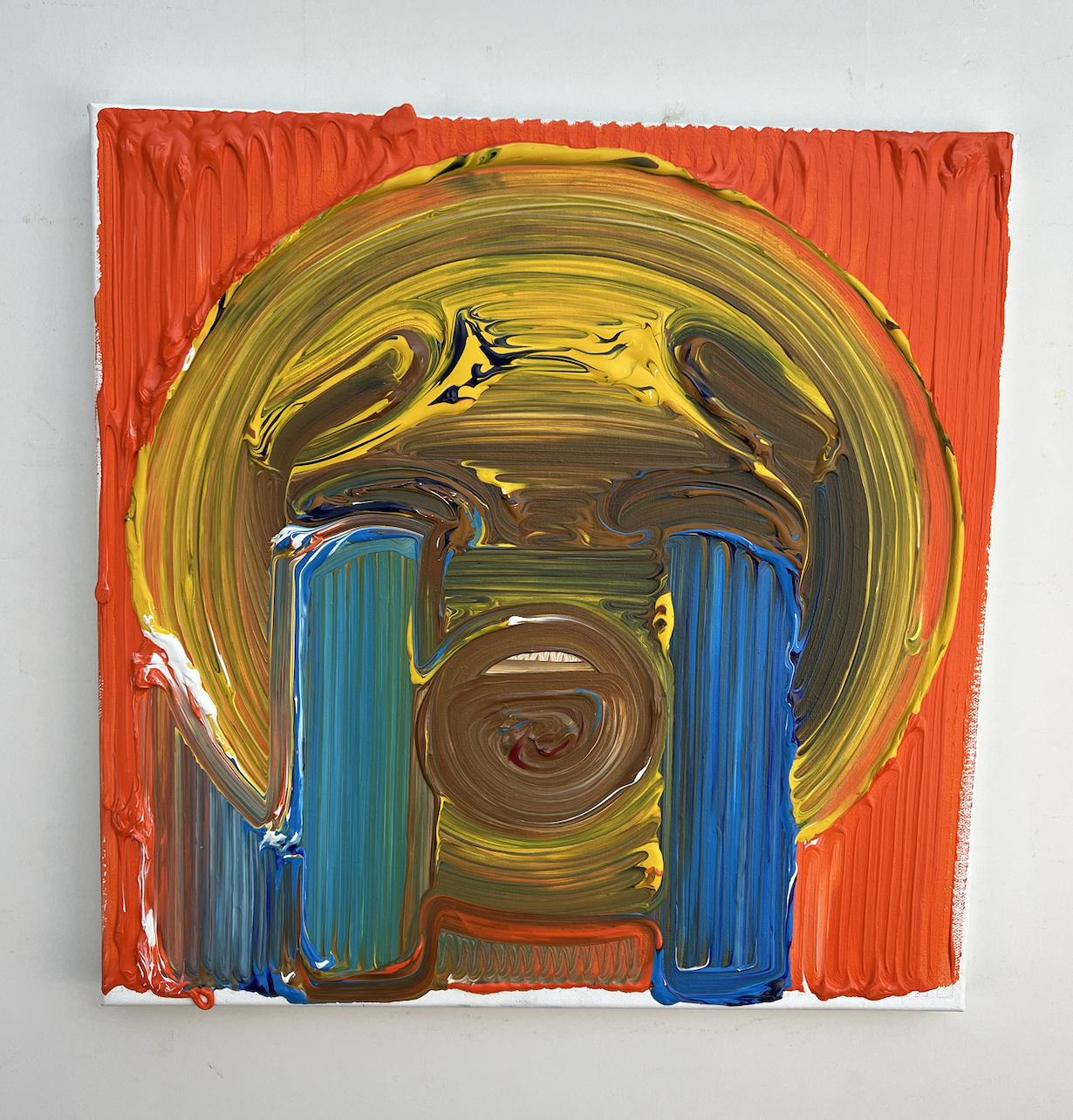
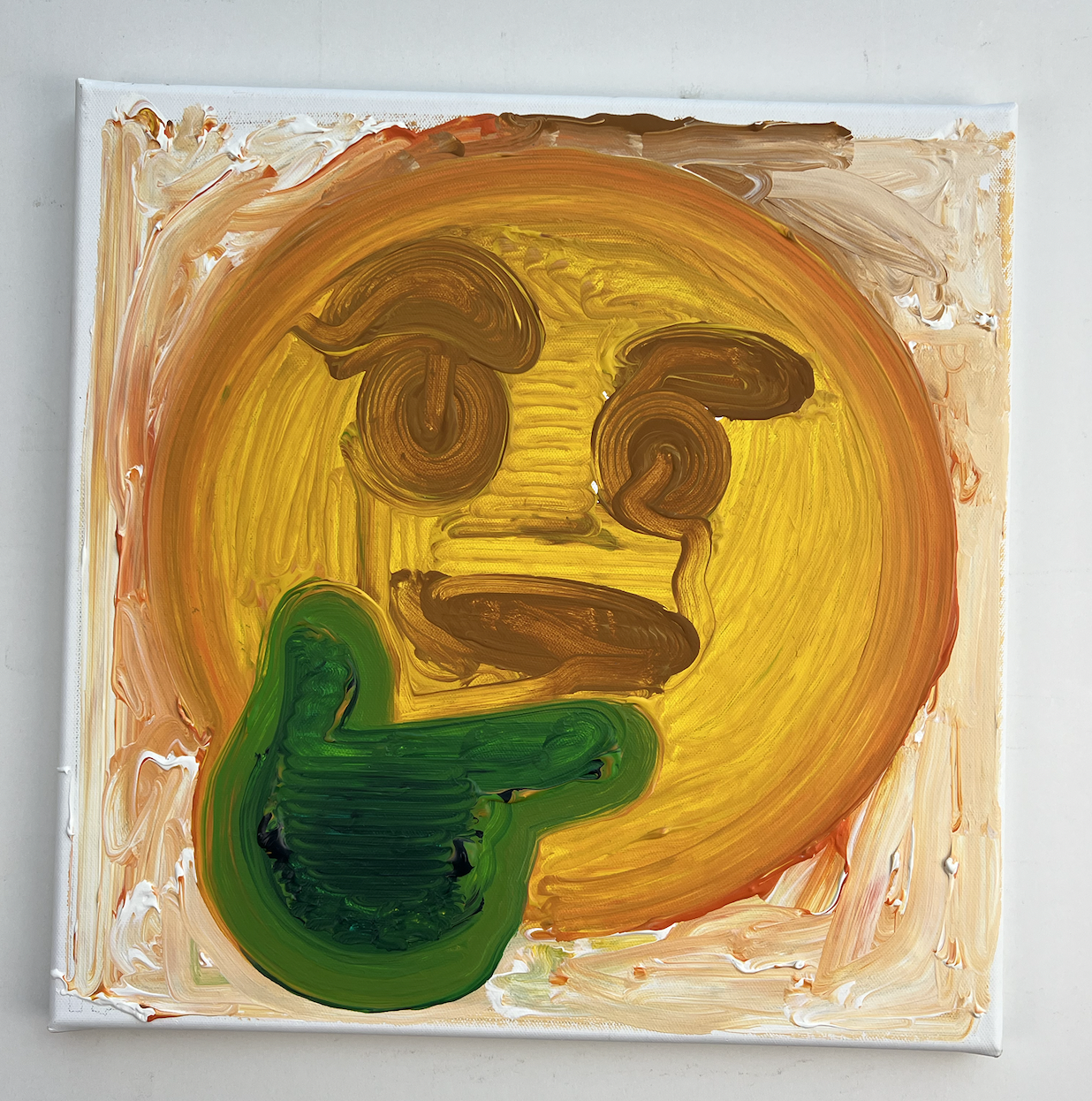
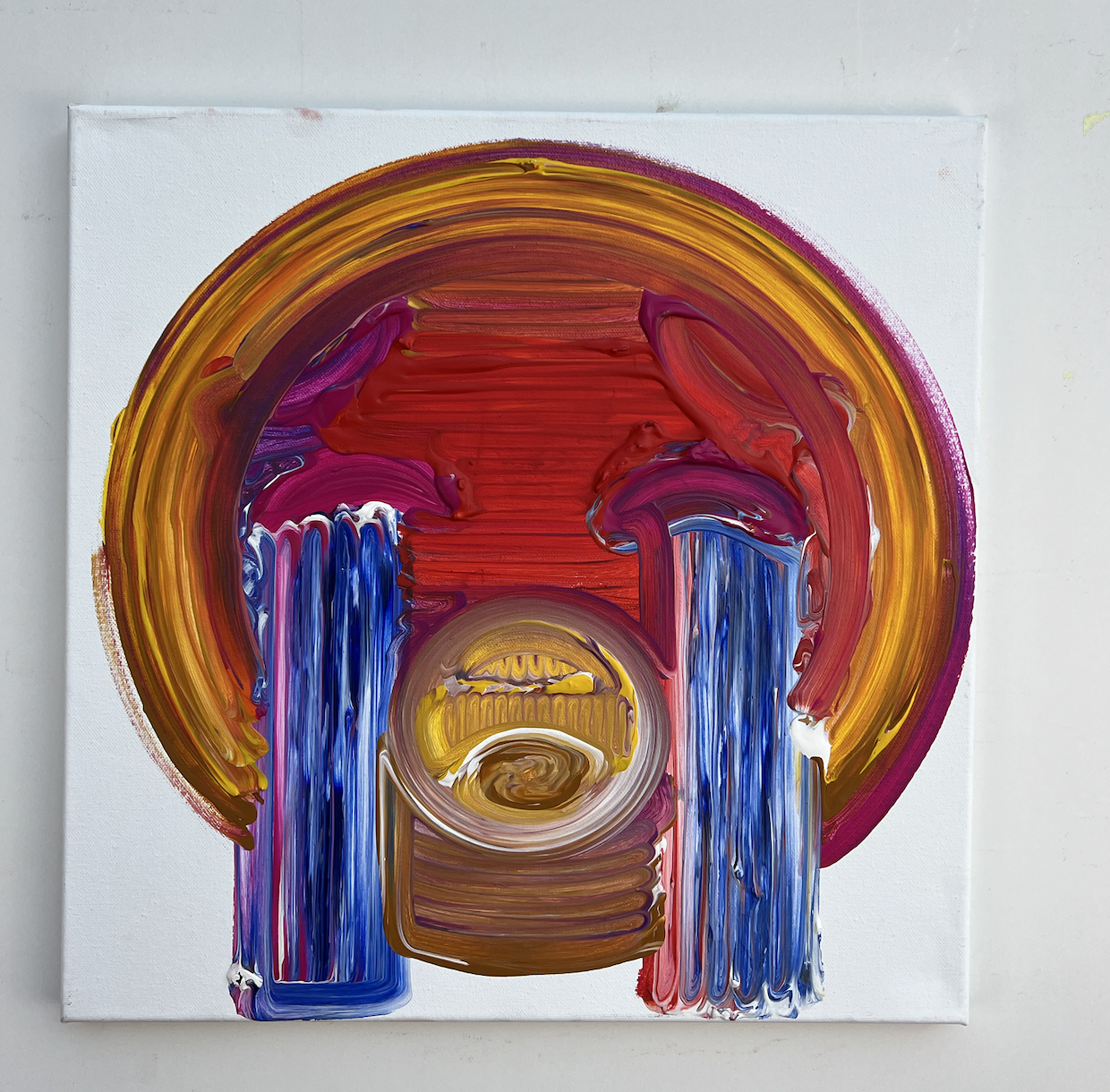
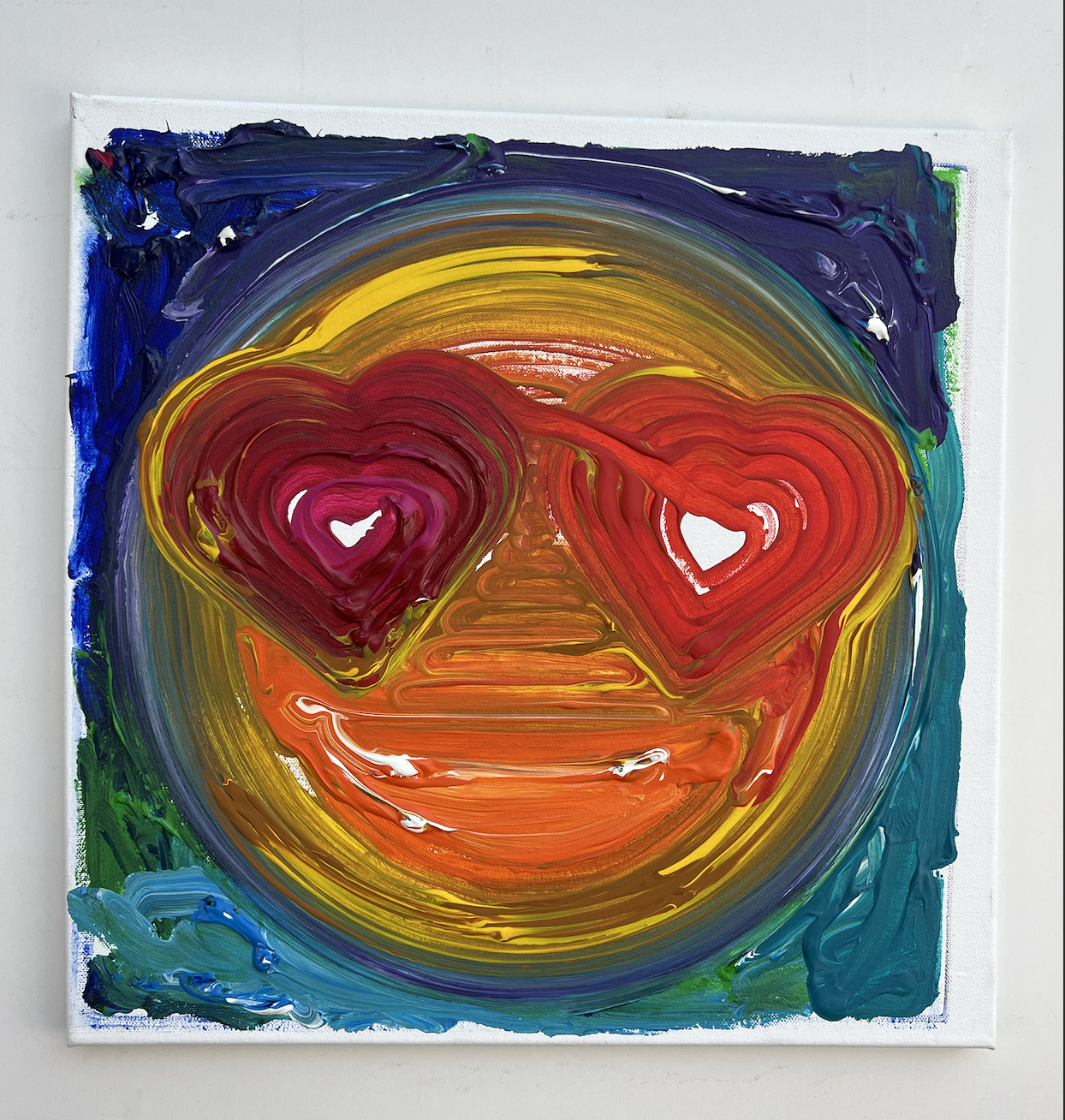
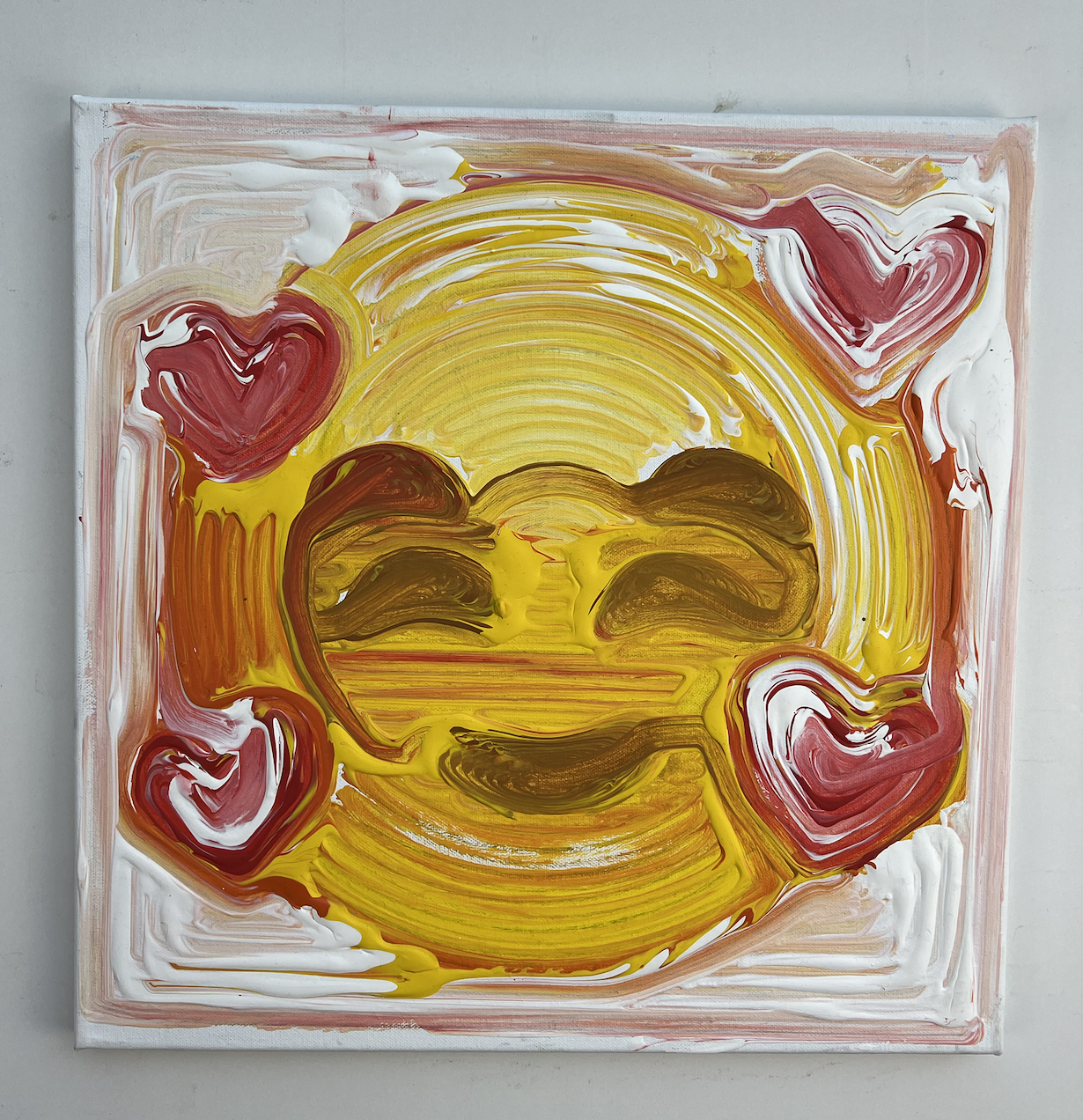
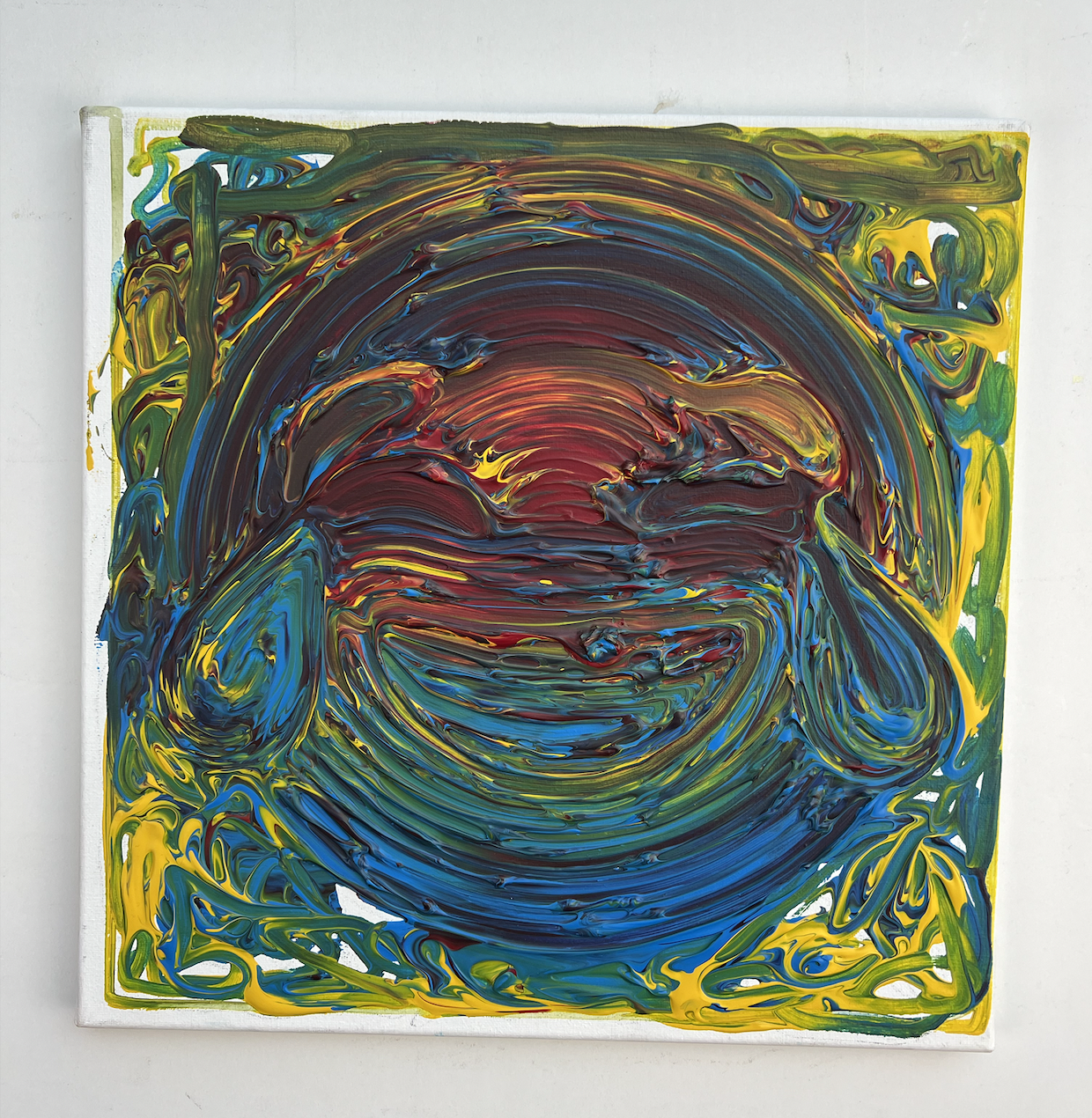
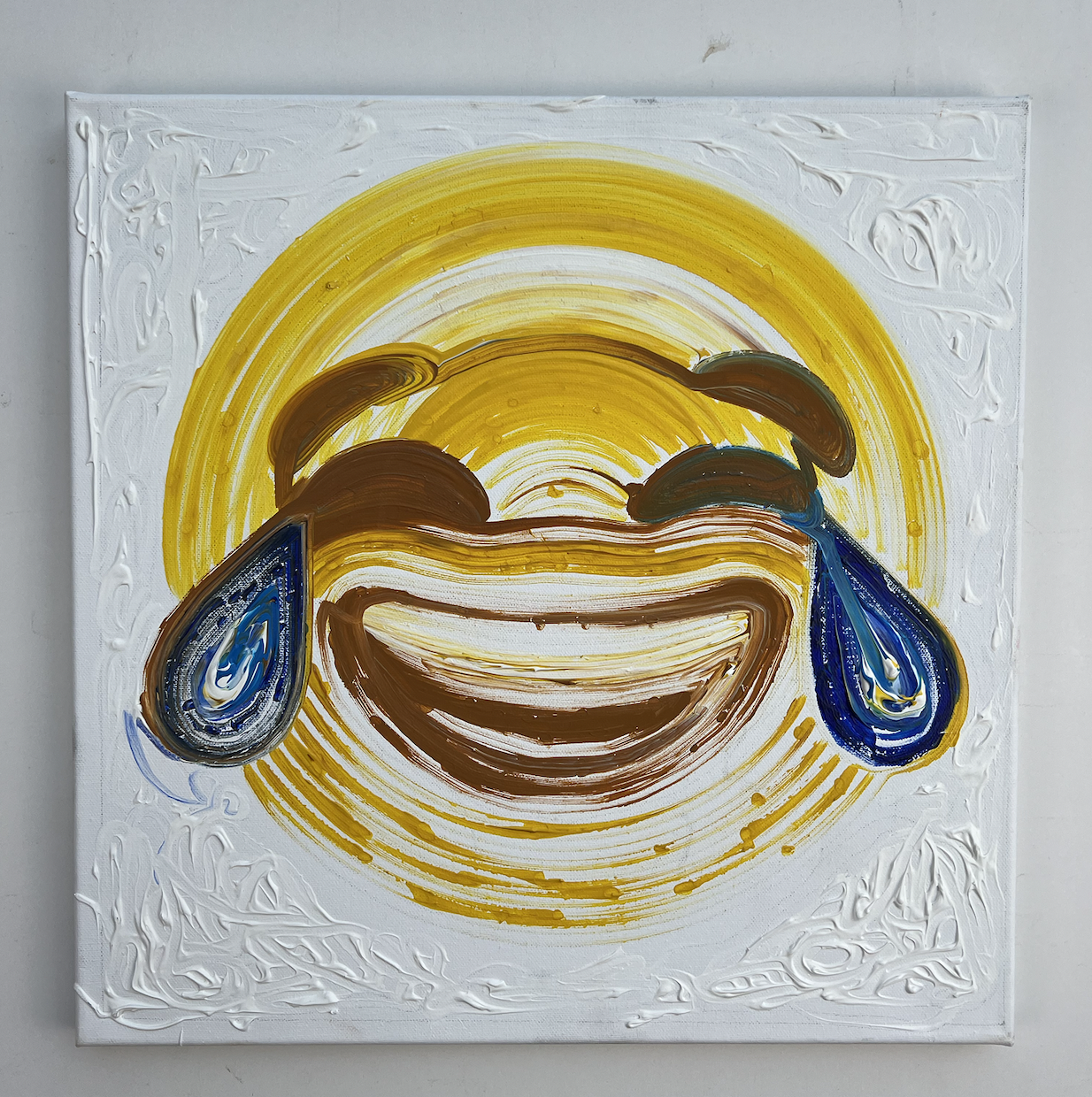
In the process I accidentally invented my own painting method: MonoSerieⁿ — a serial-unique painting system. Every time the robot paints the "same" image, it comes out slightly different. Like emotions: deeply personal, even though they follow recognisable patterns. Smile, laugh, cry — you know the template, but it's never identical.
By gluing the system together end-to-end, I shifted my status from labourer to system designer. I spent 16+ months hanging out with this robot, prototyping, refining, writing the catalogue, then stress-testing the whole thing in Emotional Capital: five days of max output, 2,300 pieces, and a full gallery show produced in days, not months.
It was a hardcore bootcamp in leverage and category design.
It changed how I see ideas, work, and what an "art practice" can be.
And it's still the period of my life I'm most grateful for.
This is how Leonⁿ became a leveraged artist — finally a leveraged worker.
I stopped fighting my life as a "starving artist" and switched my fight: from suffering for art to becoming a SystematicArtistⁿ.
A SystematicArtistⁿ consciously:
- designs leverage instead of trading hours
- orchestrates tools, people, and processes instead of doing everything by hand
- builds systems that produce work, proof, and income even when they're not in the room
Emotional Capital was the proof of concept for ArtisticLeverageⁿ: paint, robot, pricing engine, catalogue, visitors, sales funnel — all carefully designed into one system.
That's the difference: not just making art anymore. Designing systems that make art, money, and meaning at the same time.
I make things visible.
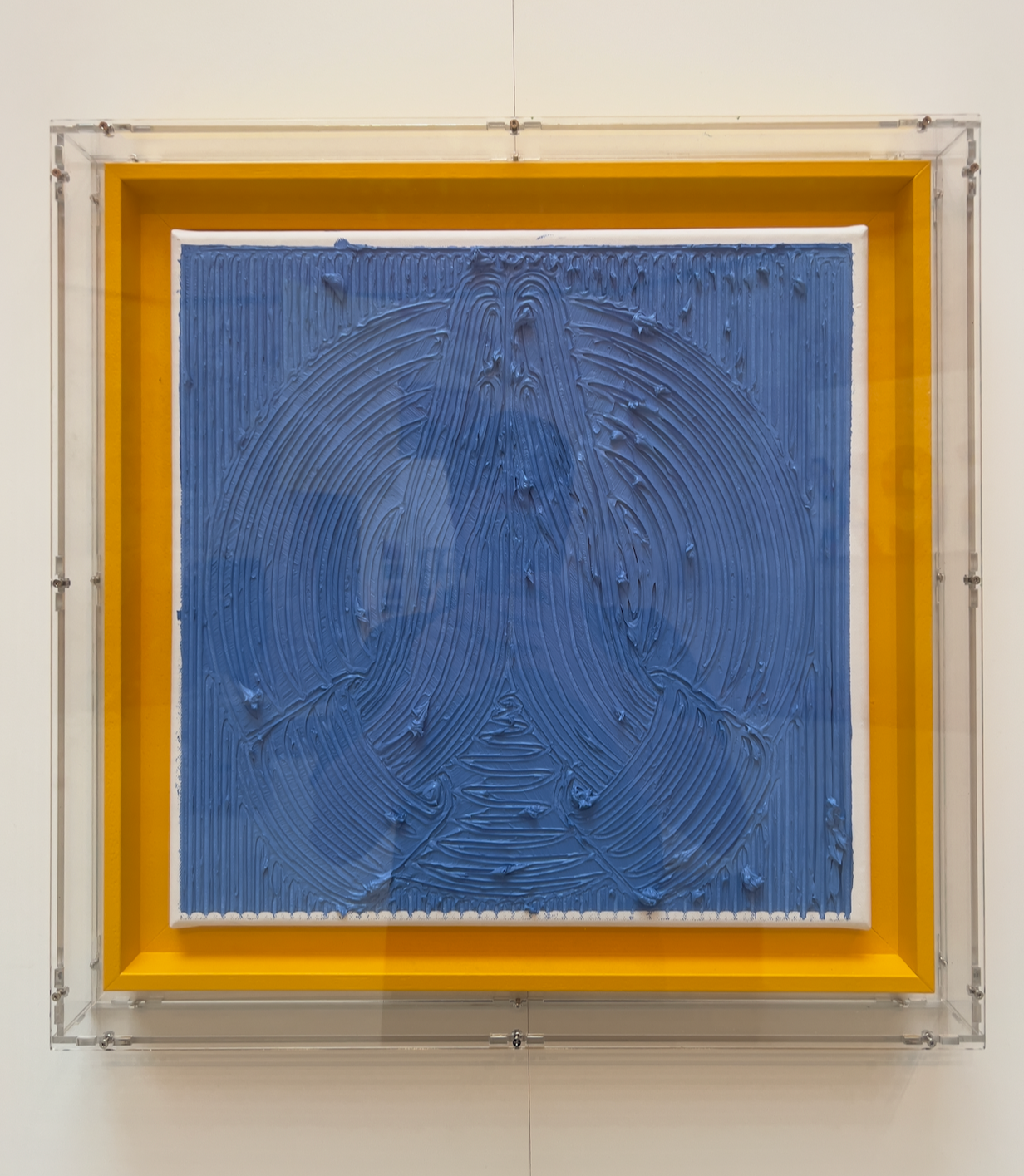
Alex Grots – Economic Substrate & Gratitude
At the entrance you see a small work: a folded‑hands emoji, framed like a classical icon. It was shown from the very beginning of the diploma process, priced at 500 €. Two more collectors bought the same motif during the show.
One of those first emoji pieces went to my business angel and art patron, Alex Grots. With 8,000 € of backing, he made the whole MonoSerie diploma possible: 2,300 serial uniques, the gallery with Holger John, the catalog, and The New Olympia. Eight thousand euros plus my energy. Without that substrate, none of this work could exist.
This is exactly what I call Law 2 – The Economic Substrate Law:
Good work can only persist on top of a viable economic base. No surplus, no stable conditions for deep, long‑term work. Ignoring the numbers doesn’t make art “pure,” it makes it fragile.
Alex was my mécène in the art world and my business angel in the startup world. The folded‑hands emoji is my way of saying thank you – and a reminder that behind every “brave” art project, someone quietly pays the bill so the work can go on.
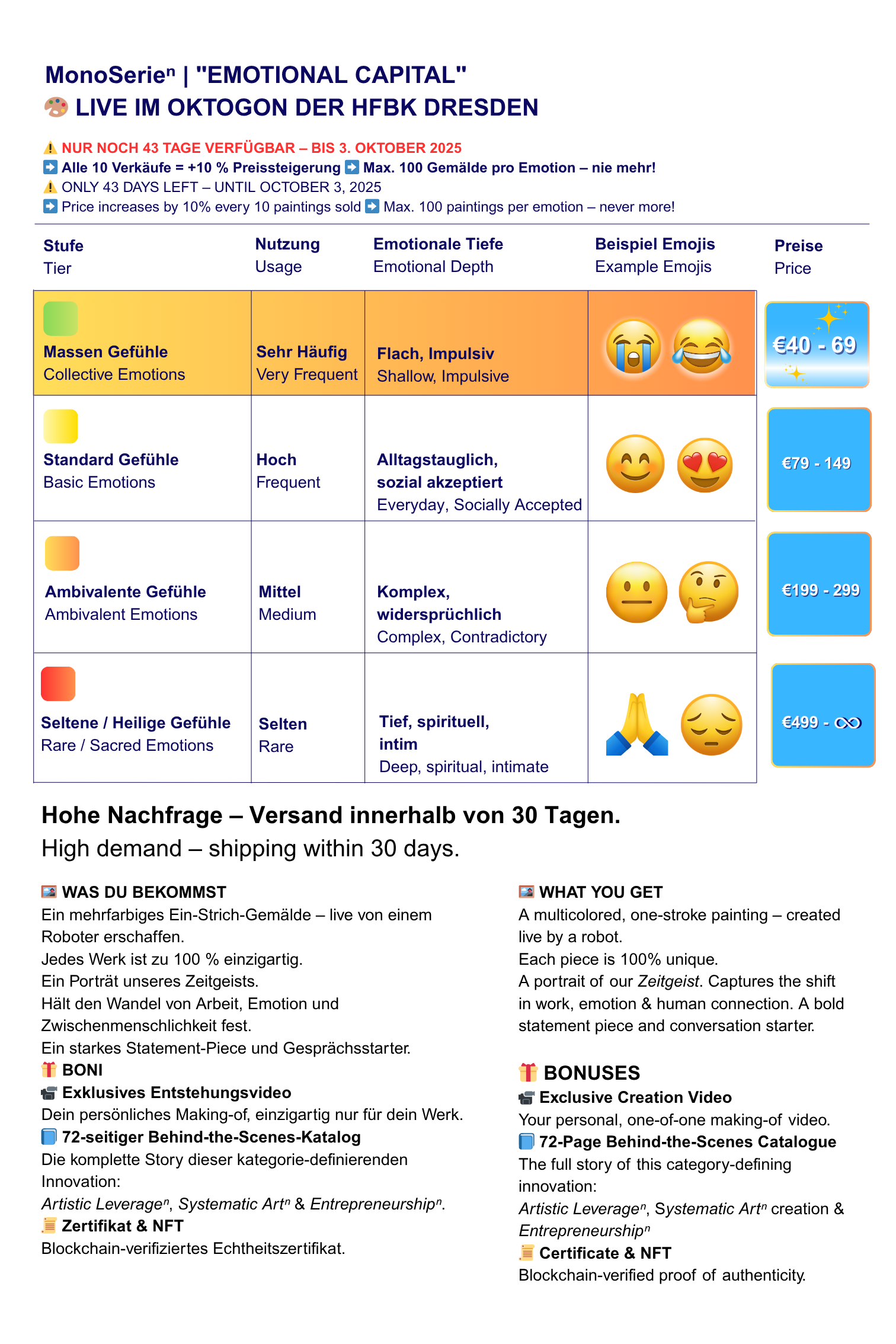
Grand Slam–style offer for art.
It commodifies the uncommodifiable.
A Grand Slam Offer cannot be compared to anything else in the market. It combines an attractive promotion, an unmatchable value proposition, a premium price, and a money model that gets you paid to acquire customers.
Philosopher Gernot Böhme distinguished between use value (what a thing does) and staging value (what atmosphere it creates, what it makes you feel). In the aesthetic economy, he argued, we no longer buy function – we buy staged feeling.
My pricing model takes that literally and pushes it one step further:
Collective emotions = low staging value, mass‑produced feeling, cheap
Sacred emotions = maximum staging value, irreproducible atmosphere, open‑ended price
Böhme described how objects are staged.
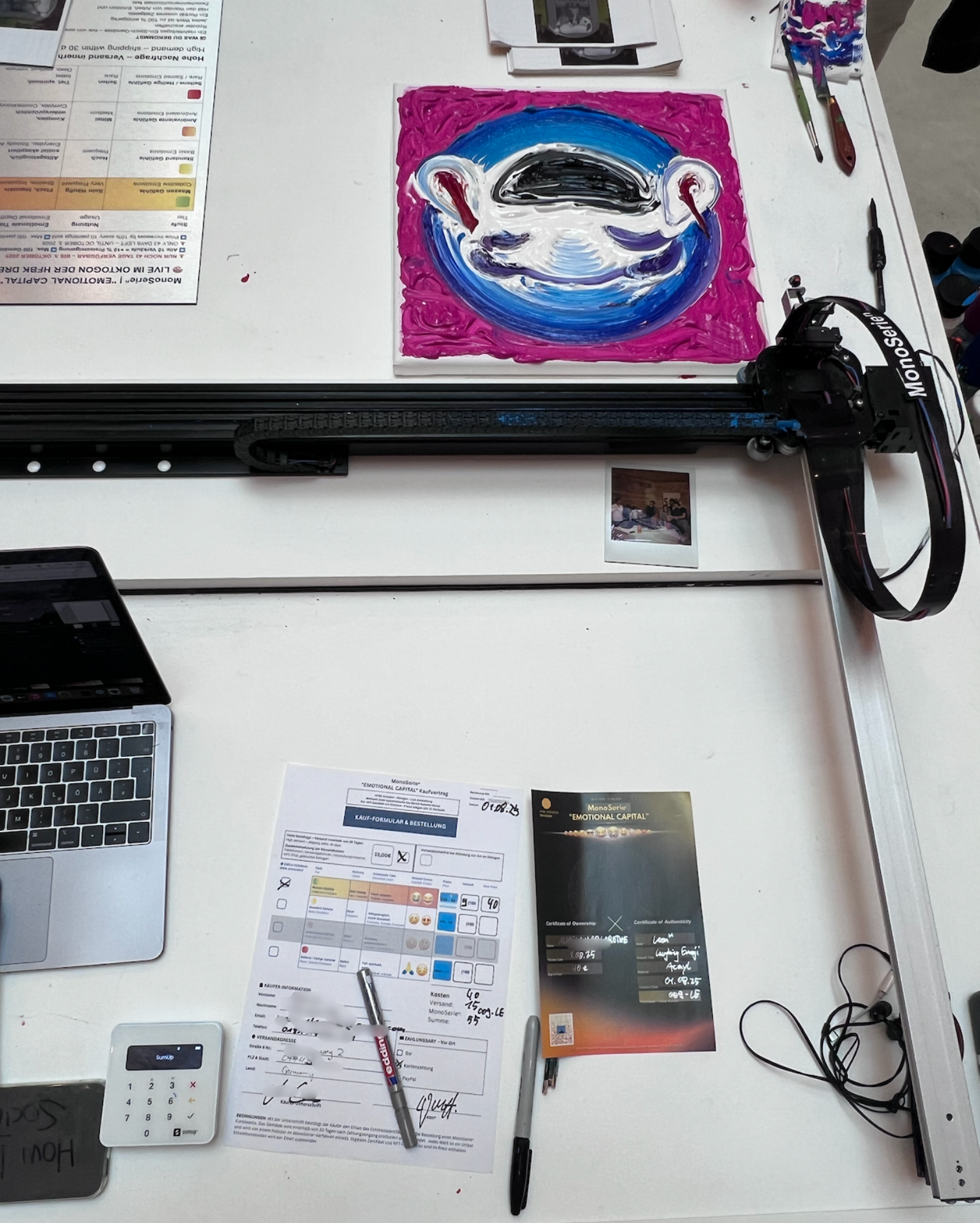
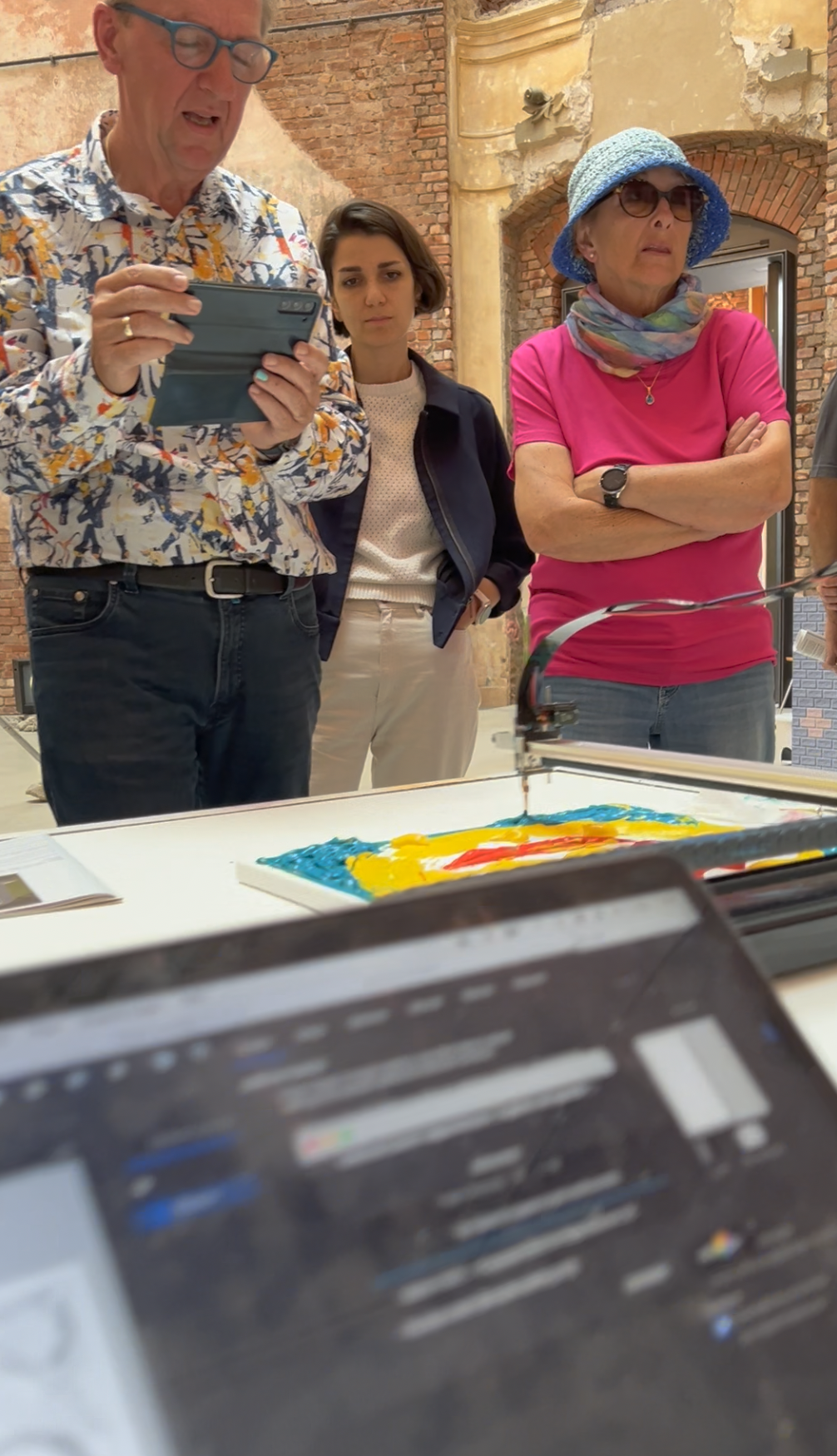
Emotional Capital stages the production of feeling itself – the robot’s 43‑second (up to ~8:38 min) run, the visitor painting, the atmosphere in the Oktogon – and then prices the emotion tier that this staging creates.
Böhme mapped the territory.
I built a business model on top of his map.
This is not a painting. This is a price tag on your inner life.
Every emotion you've ever posted, shared, performed, or sold to an algorithm already has a market value.
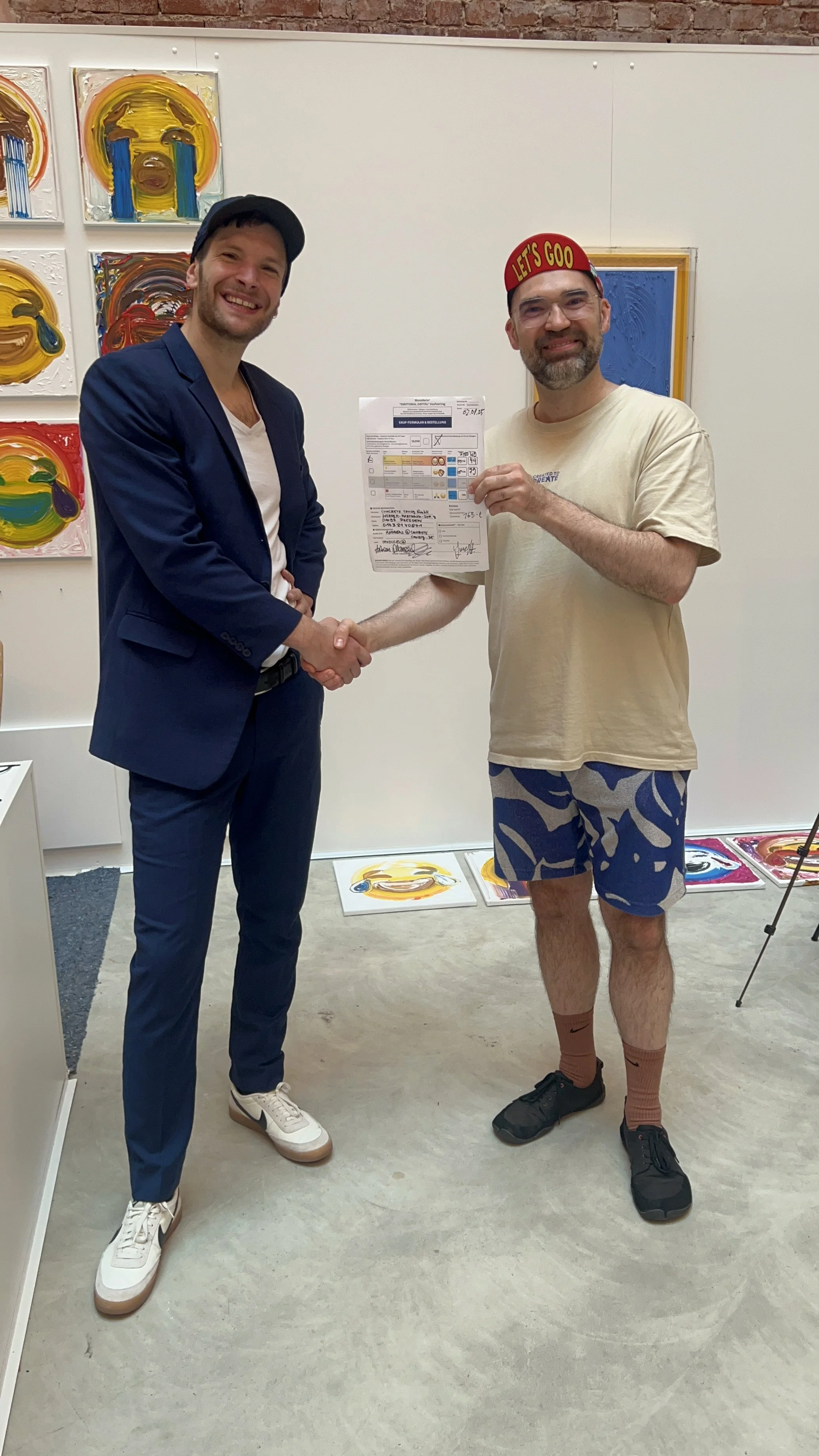
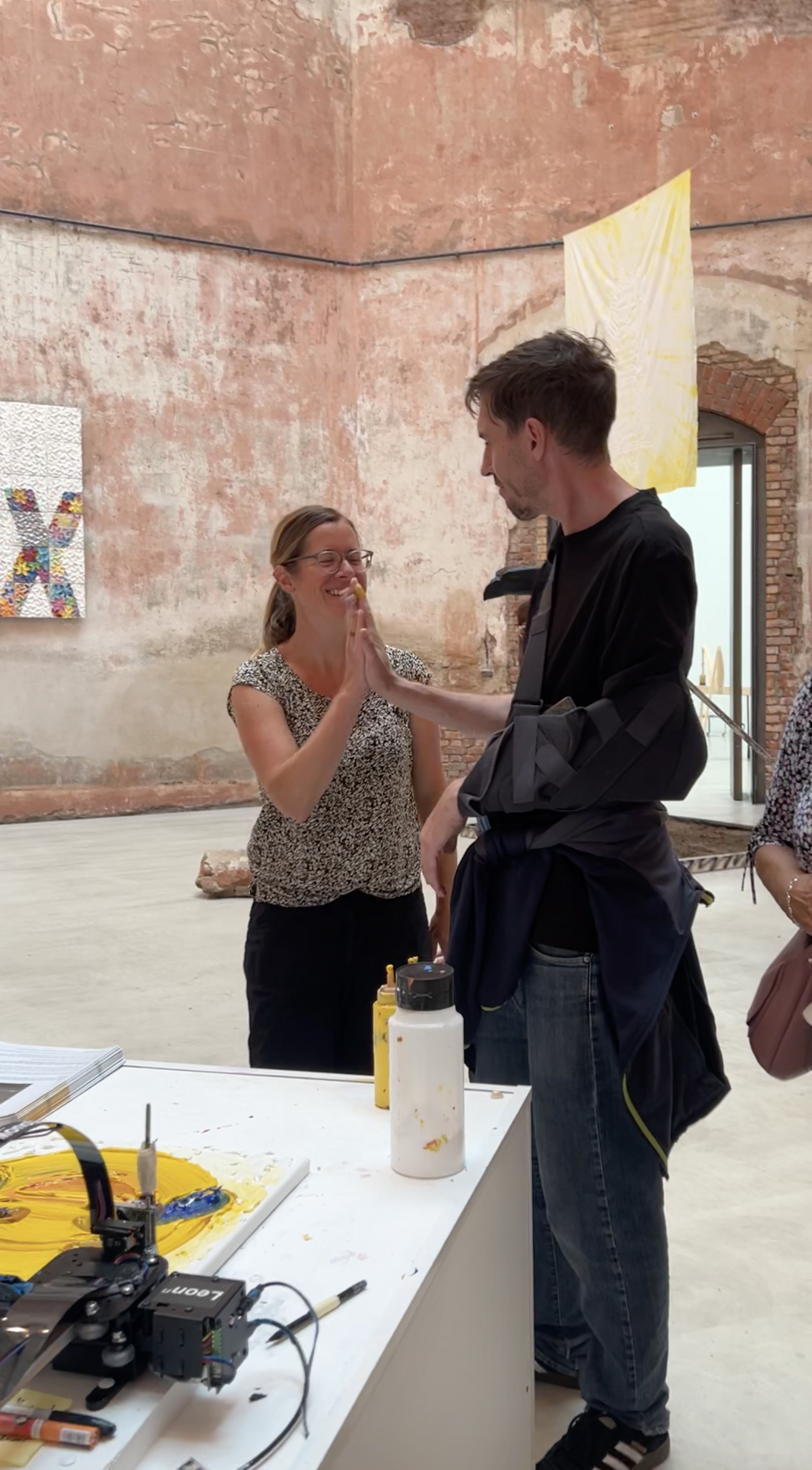
I closed €3,100 in direct art sales from 32 paying visitors inside the Oktogon in Dresden between 25.07 and 07.09.2025.
People bought.
The emotional capital became real money.
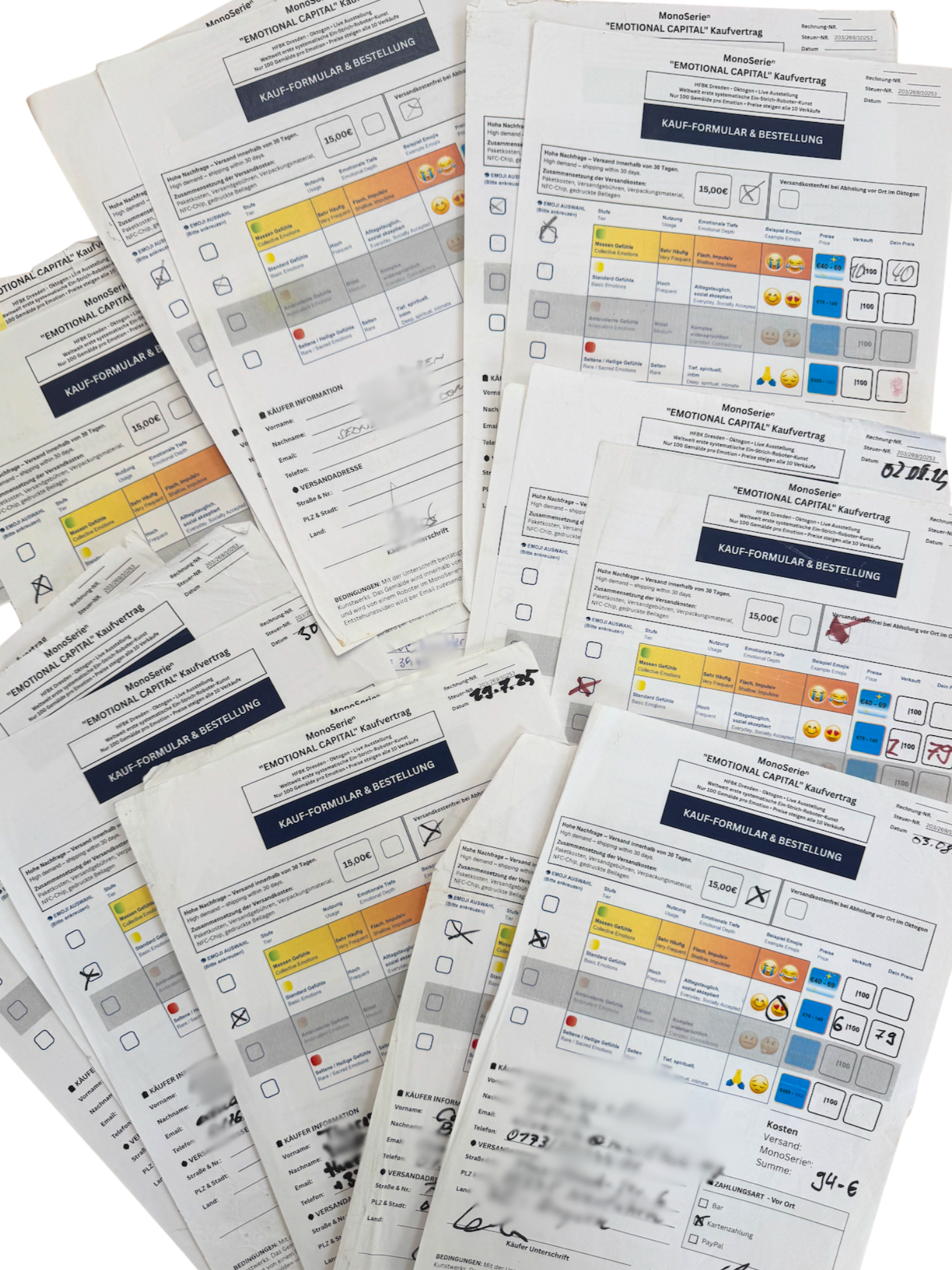
What I actually sold
I had four emotion tiers and sold:
18× Massen Gefühle / Collective (😭😂) → list: €40–69
11× Standard Gefühle / Basic (😊😍) → list: €79–149
1× Ambivalente Gefühle / Ambivalent (😐🤔) → list: €199–299
3× Seltene / Heilige / Sacred (🙏😔) → list: €499–∞
Total pieces: 33
Cash actually closed: €3,184 from 33 buyers.
“With my four emotion tiers and the +10% ladder every 10 sales, I sold 33 pieces to 33 buyers and closed €3,184 in direct revenue.”
The sale itself was part of the artwork:
through real capital transfer, emotional quality was traded as emotional equity and priced accordingly.
Who bought?
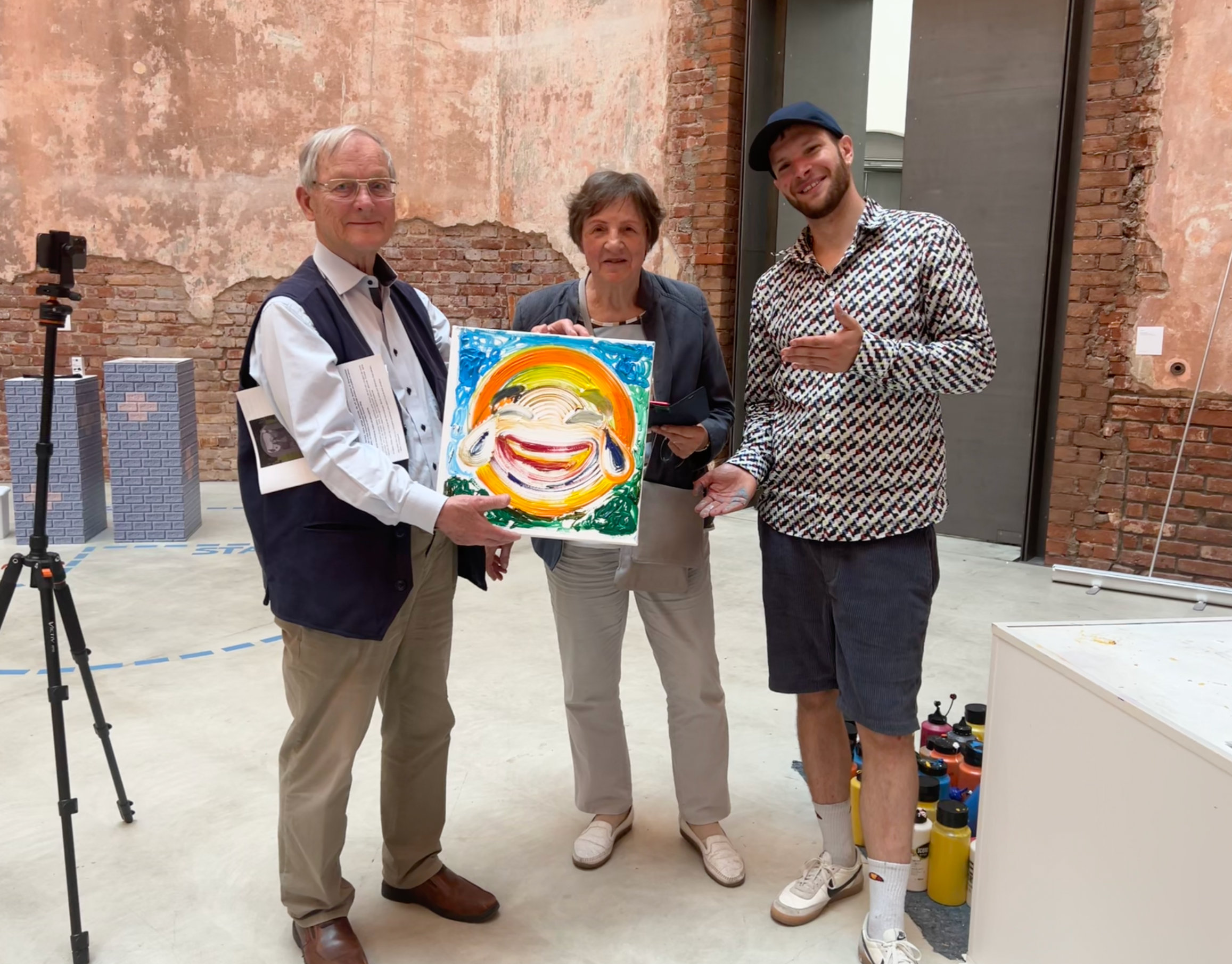
33 people who turned Emotional Capital into real capital were not “art insiders.” They were:
Family fathers and mothers
Entrepreneurs and a sales rep
A social worker
An auto‑mechanic engineer
An architect
A politician
A student on the way to becoming a teacher
A former engineer
A former teacher
A grandmother
A Psychotherapist
And many more…
… from very different lives, professions & income levels – all willing to pay for an emotion made tangible.
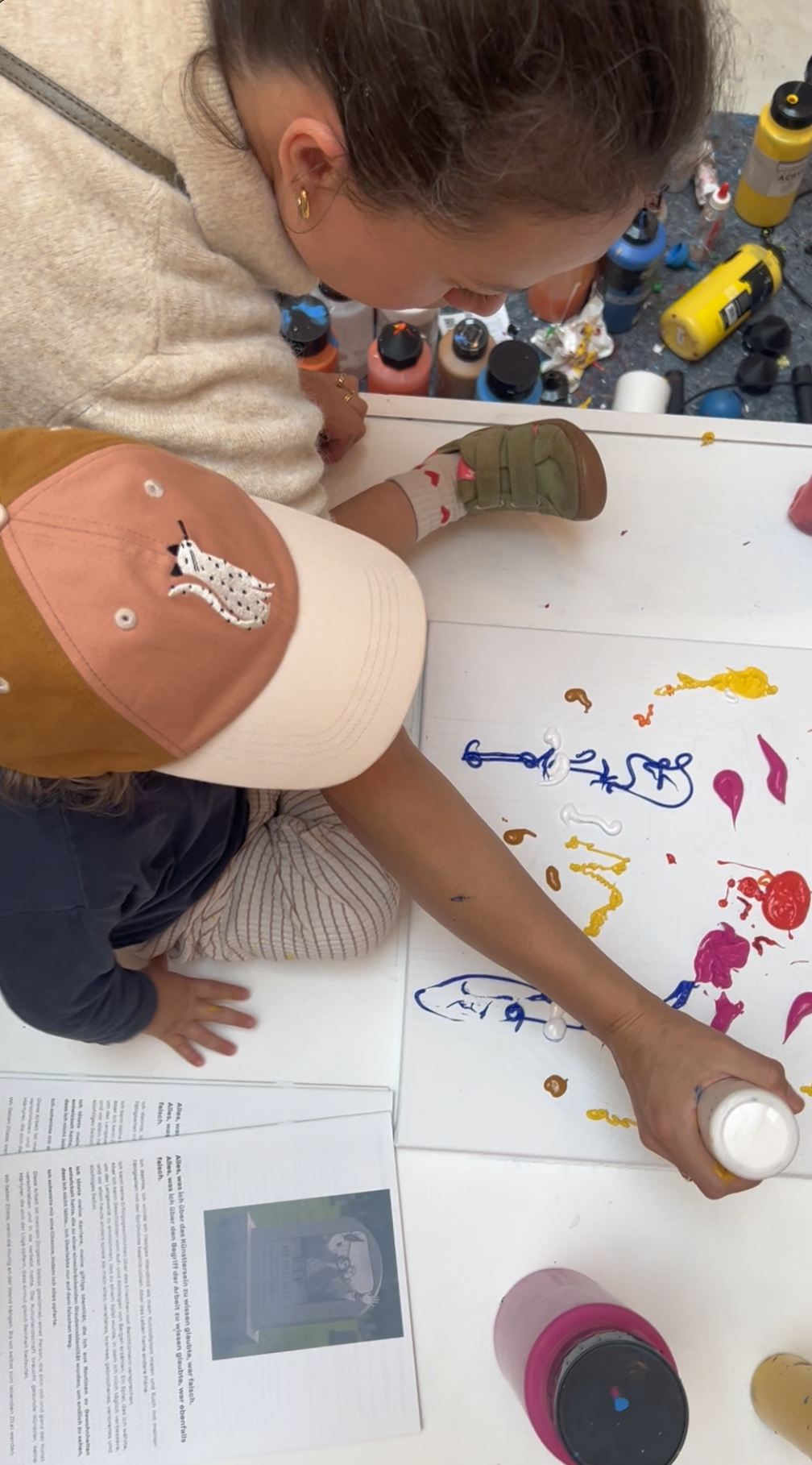
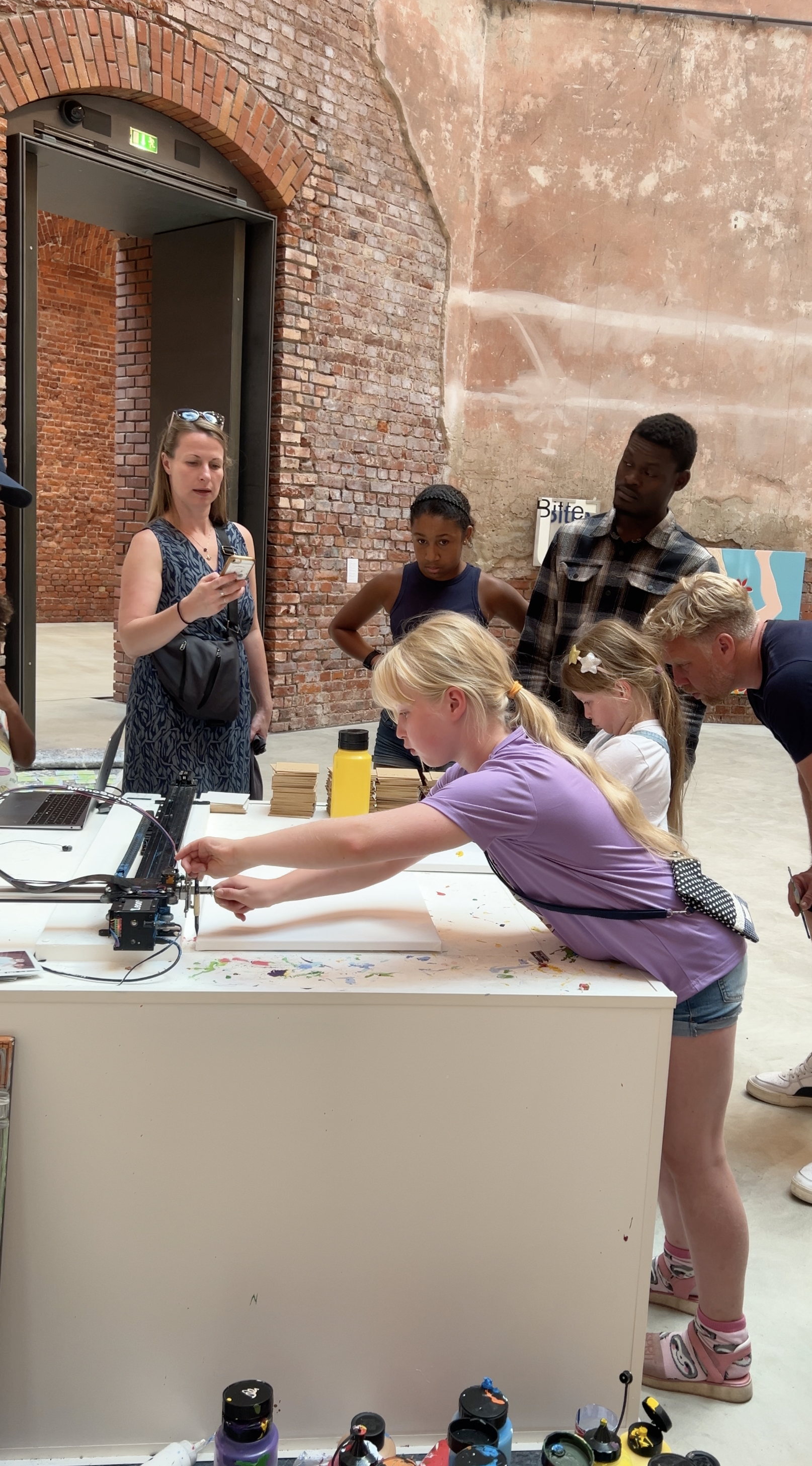
Who painted?
Everyone who got past the door.
Kids: 3, 7, 11 years old
School classes and teenagers
Students, Gen Z, Millennials, Boomers
Visitors up to 74 years old
All social strata, all age groups. The only real barrier was not the system – it was the entry ticket for the diploma exhibition.
And that’s the part I want to criticise:
How can it be that the launch event for a new generation of artists is paywalled so most of society stays outside?
If art is supposed to educate, open, and reflect a culture back to itself, the default shouldn’t be a mandatory ticket at the door. It should be:
“I spend money if I want to own something,
not just to be allowed to see it.”
What this means structurally
The exhibition was the funnel.
The catalogue was the free lead magnet.
The pricing sheet was the sales page.
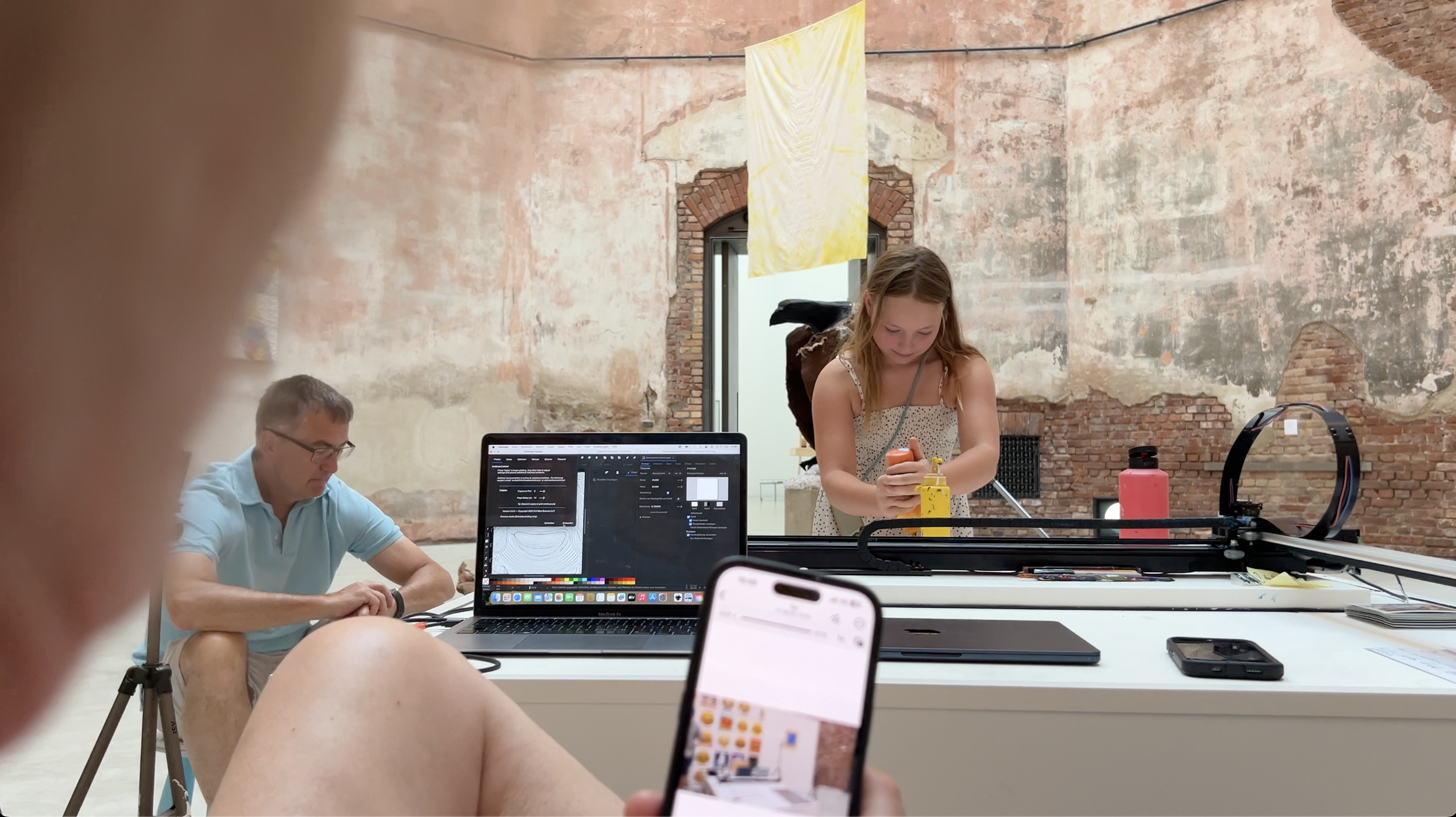
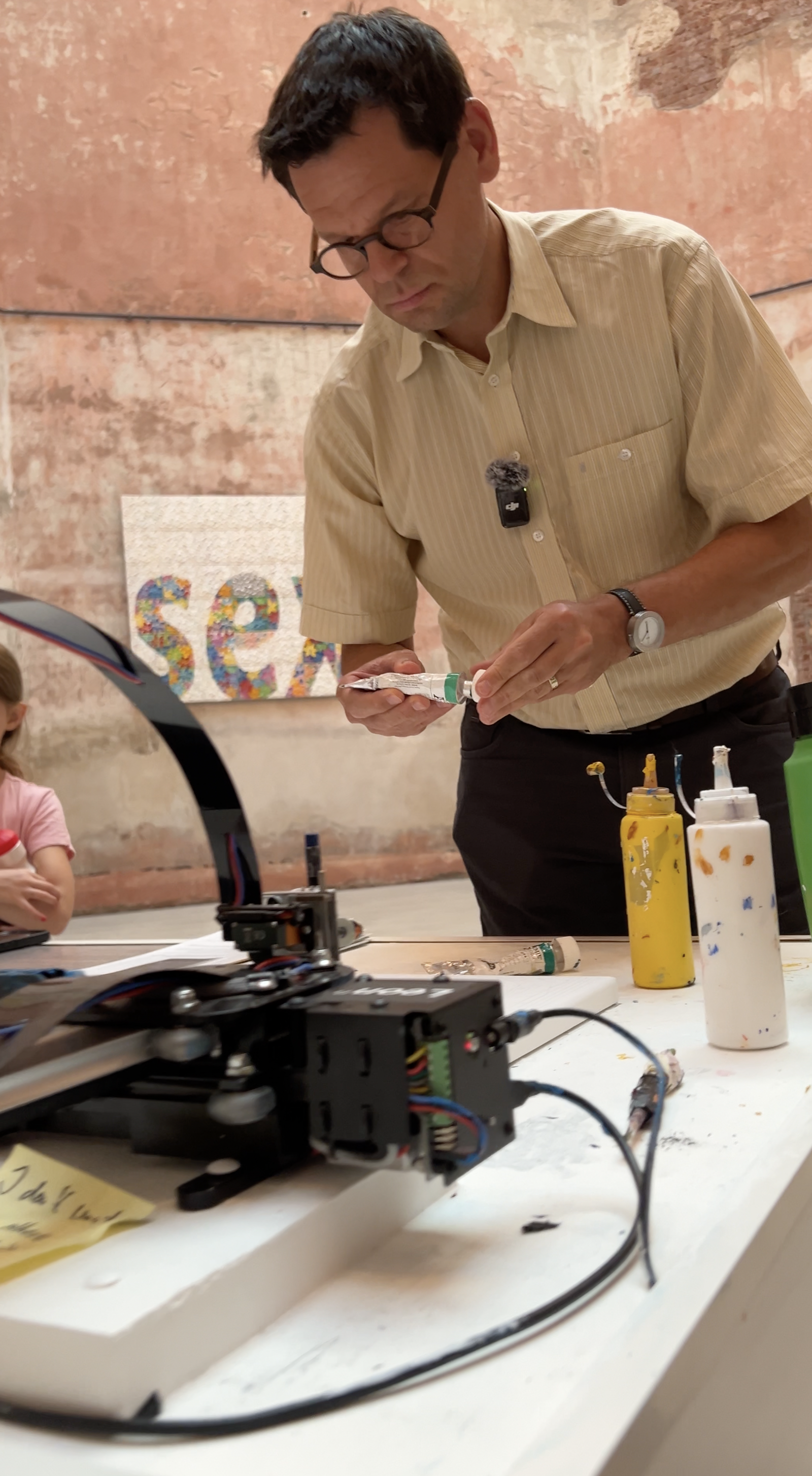
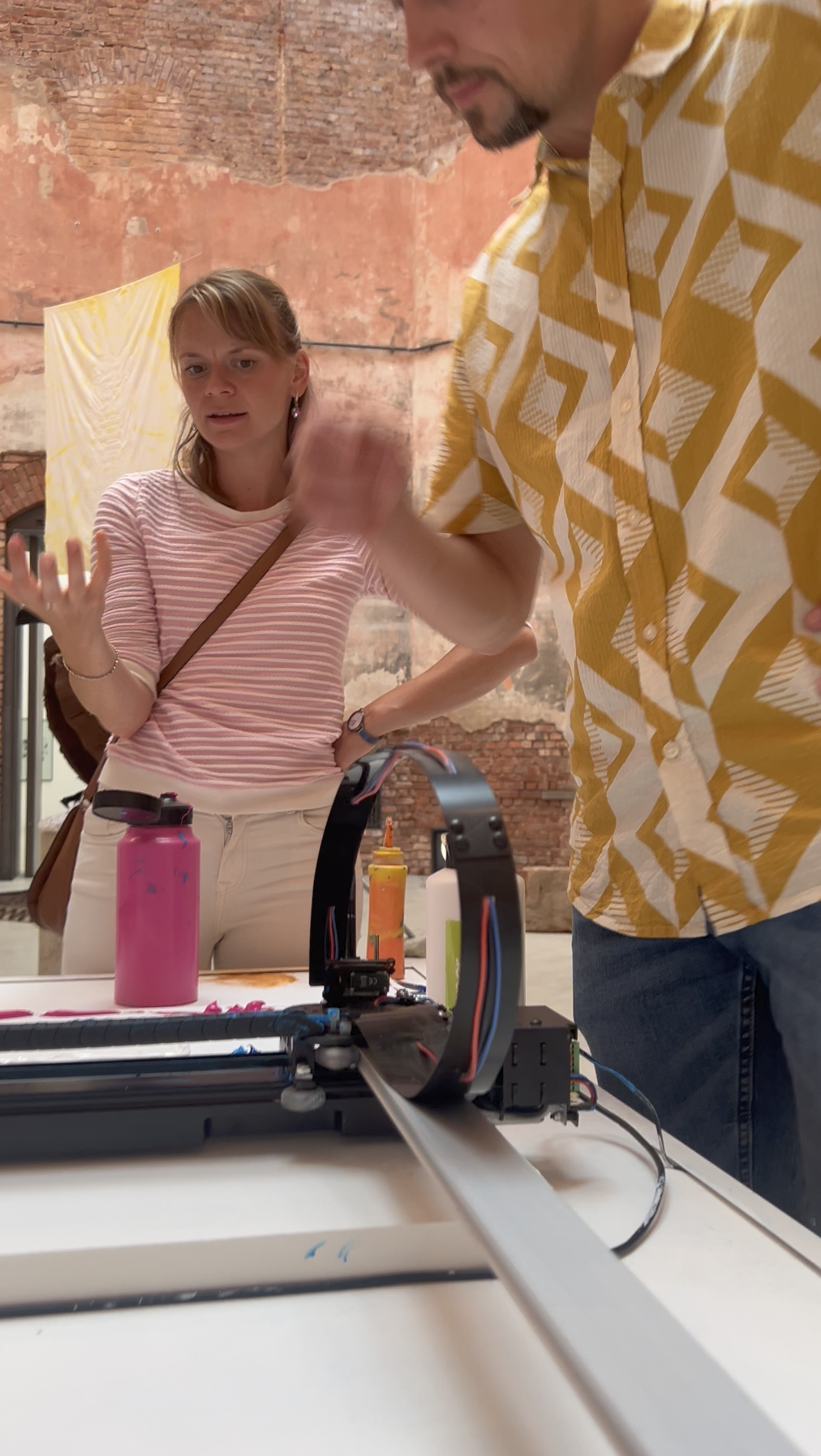
The robot was the live demonstration.
The visitor painting was the free trial.
The moment someone picked an emoji, chose a colour, and applied it, they projected identity and ownership onto the piece. It became theirs before any money moved.
The purchase was the conversion.
The certificate was retention.
The works others had already painted and left in the room were the social proof that the system was real long before any new buyer arrived.
Nobody “sold” them anything.
The system did.